Learning how to toilet train a puppy is one of the first challenges new puppy owners face. With a consistent routine, patience, close supervision, and positive reinforcement, your puppy can learn where and when to go to the toilet. If your puppy has only just arrived, our guide to the first week with a new puppy can help you establish a routine from the beginning.
Table of Contents
How to Toilet Train a Puppy Step by Step
Successful toilet training depends on repeating the same simple steps every day:
- Choose one designated toilet area.
- Take your puppy outside regularly.
- Watch for signs that your puppy needs to go.
- Reward successful toilet trips immediately.
- Clean indoor accidents with an enzyme cleaner.
Create a Consistent Daily Routine
Puppies respond well to predictable routines. Take your puppy to their designated toilet area first thing in the morning, after meals, after naps, after playtime, and before bedtime. Young puppies may also need additional toilet breaks throughout the day.
Feed your puppy at similar times each day and make sure everyone in the household follows the same routine. Consistency helps your puppy understand what is expected and can reduce accidents inside the house. Following a regular puppy feeding schedule can also make toilet breaks easier to predict.
Take Your Puppy Outside at the Right Times
Your puppy is more likely to need the toilet after waking, eating, drinking, playing, or becoming excited. Take them outside promptly instead of waiting for an accident to happen. This predictable timing is an important part of learning how to toilet train a puppy successfully.
Watch for warning signs such as sniffing the floor, circling, becoming restless, wandering away, or moving towards the door. When you notice these signs, calmly take your puppy to the toilet area.
Use the Same Toilet Area and Cue
Take your puppy to the same toilet area whenever possible. The familiar location and scent can help them understand what they are expected to do. You can also quietly repeat a simple cue such as “toilet” or “go potty” while you wait.
Avoid distracting your puppy with games until they have finished. If your puppy has not completed their vaccinations, ask your veterinarian which outdoor areas are safe to use.
Reward Good Toilet Habits
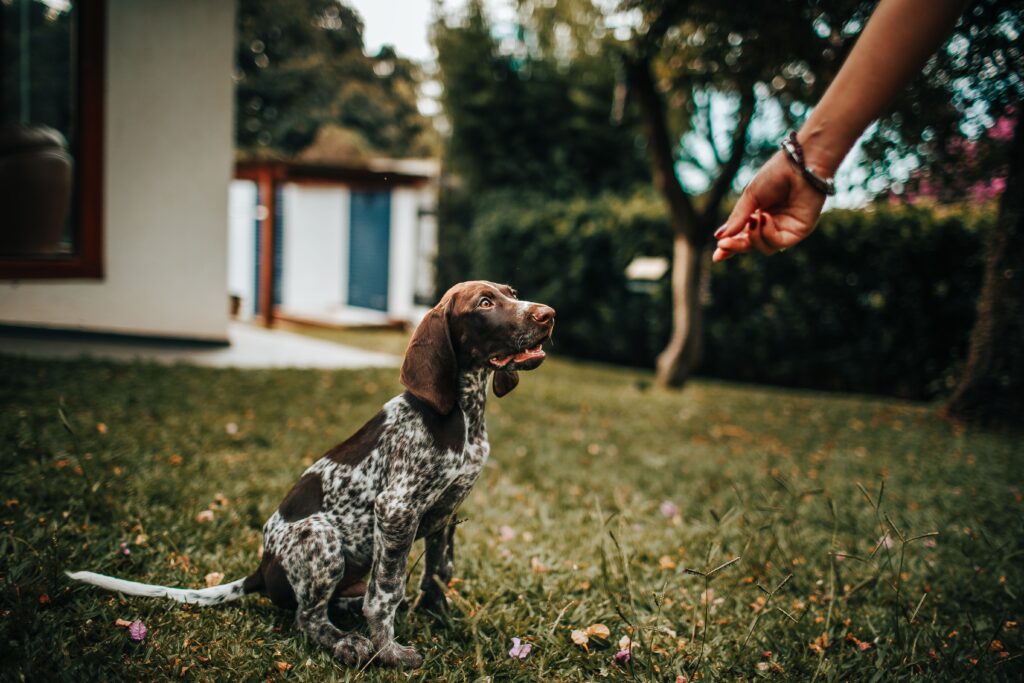
Reward your puppy immediately after they finish using the designated toilet area. Offer calm praise, a small treat, or a short play session. Giving the reward straight away helps your puppy connect the reward with the correct behavior. Do not wait until you are back inside to offer the reward, as your puppy may not understand what they are being rewarded for.
The RSPCA’s toilet-training guidance explains why rewards should be given immediately after your puppy toilets in the correct place.
Supervise Your Puppy Indoors
Keep your puppy nearby when they are awake so you can notice the early signs that they need the toilet. Baby gates or a puppy-safe playpen can help you limit access to rooms when close supervision is difficult.
If you’re using a crate as part of your puppy’s routine, see our guide to the best puppy crates for safe and practical options.
Supervision prevents your puppy from repeatedly using hidden areas of the house as a toilet. It also allows you to guide them outside before an accident occurs.
How to Handle Toilet Training Accidents
Accidents are a normal part of puppy toilet training. Do not shout at, frighten, or punish your puppy. Punishment can make a puppy afraid to go to the toilet in front of you without teaching them the correct place to use.
If you notice an accident beginning, calmly interrupt your puppy and take them to the designated area. Clean the indoor spot thoroughly with a pet-safe enzyme cleaner to remove lingering odours. Then continue with your usual toilet-training routine.
Sample Puppy Toilet Training Schedule
| Time | What to Do |
|---|---|
| Morning | Take your puppy outside immediately after waking |
| After breakfast | Offer a toilet break shortly after eating |
| After naps | Take your puppy outside as soon as they wake |
| After playtime | Offer another toilet break |
| During the day | Provide regular breaks based on your puppy’s needs |
| Before bed | Take your puppy out for a final toilet break |
Common Puppy Toilet Training Mistakes
Toilet training can take longer when a puppy receives inconsistent instructions. Common mistakes include:
- Waiting too long between toilet breaks.
- Punishing your puppy for accidents.
- Changing the designated toilet area too often.
- Waiting too long to reward successful toilet trips.
- Allowing your puppy to wander around the house unsupervised.
- Expecting complete toilet training too quickly.
Signs Your Puppy Is Learning
As your puppy begins to understand the routine, you should notice fewer accidents. They may wait near the door, seek your attention, or use another familiar signal when they need to go outside. Your puppy may also begin using the same outdoor area more consistently.
Continue rewarding good behavior even when your puppy appears to be making progress. Occasional setbacks can happen, especially when routines or surroundings change.
Frequently Asked Questions
How long does it take to toilet train a puppy?
Many puppies make noticeable progress within a few weeks, but becoming consistently reliable can take several months. The time required depends on the puppy’s age, previous training, routine, environment, and individual development.
Should I wake my puppy during the night?
Very young puppies may need one or more toilet breaks during the night. If your puppy wakes, whines, or becomes restless, take them directly to the toilet area and keep the trip quiet and calm. As your puppy matures, they should gradually be able to sleep for longer. For more support with bedtime routines, read our guide to the first night with a new puppy.
What if my puppy keeps having accidents?
Review how often you are providing toilet breaks and supervise your puppy more closely indoors. Continue cleaning accidents thoroughly and rewarding successful trips. Contact your veterinarian if the accidents suddenly increase or are accompanied by straining, diarrhea, excessive thirst, or unusually frequent urination.
Key Things to Remember
- Follow a predictable daily routine.
- Take your puppy outside after waking, eating, and playing.
- Reward successful toilet trips immediately.
- Never punish your puppy for an accident.
- Use an enzyme cleaner on indoor accidents.
- Remain patient and consistent while your puppy learns.
Understanding how to toilet train a puppy takes time, but a calm and consistent approach will help your puppy develop reliable habits. Celebrate small improvements and continue practising the routine until your puppy is consistently using the correct toilet area.