Your first night with a new puppy can be exciting, exhausting and a little unpredictable. Your puppy has suddenly left the people, animals, smells and surroundings they knew and arrived somewhere completely unfamiliar.
It is normal if they seem unsettled, cry, wake during the night or need several toilet breaks. Your job on the first night isn’t to create a perfect sleeping routine. It is to help your puppy feel safe while beginning the routine you want to establish at home. Preparing their sleeping area before they arrive and keeping the evening calm can make the transition easier for both of you.
Table of Contents
How to Prepare for the First Night With a New Puppy
Set up your puppy’s sleeping area before bringing them home. This might include a suitable crate, bed or another safe sleeping space, depending on how you plan to manage your puppy. Choose a quiet area away from excessive household activity, but don’t automatically isolate your puppy at the other end of the house.
For the first few nights, having your puppy reasonably close to you can make it easier to reassure them and notice when they wake for a toilet break. Keep the sleeping area comfortable and free from anything your puppy could easily chew, swallow or become tangled in.
It is also worth having cleaning supplies, poop bags and anything you’ll need for nighttime toilet trips ready before you go to bed. Searching through cupboards at 2 am with a wide-awake puppy isn’t anyone’s ideal introduction to puppy ownership.
Keep the First Evening Calm
Your puppy’s first day has already been enormous from their perspective. They may have travelled in a car, met new people, explored an unfamiliar home and experienced completely new sights, sounds and smells.
You don’t need to entertain them continuously. Give your puppy opportunities to explore their safe area at their own pace, rest and spend quiet time with you. Try to avoid turning the evening into a parade of visitors, vigorous games and constant excitement. A calmer environment can help your puppy begin winding down before bedtime.
Take Your Puppy for a Toilet Break Before Bed
Give your puppy an opportunity to toilet shortly before bedtime. Take them to the toilet area you plan to use regularly and give them enough time to relieve themselves. Keep the experience calm rather than turning it into playtime.
For puppies that are not fully vaccinated, ask your veterinarian about safe toilet and outdoor areas. Areas used by unknown dogs can carry infectious-disease risks for incompletely vaccinated puppies.
A final toilet break won’t guarantee an accident-free night, particularly with a very young puppy, but it gives them the best opportunity to start the night comfortably.
Where Should Your Puppy Sleep on the First Night?
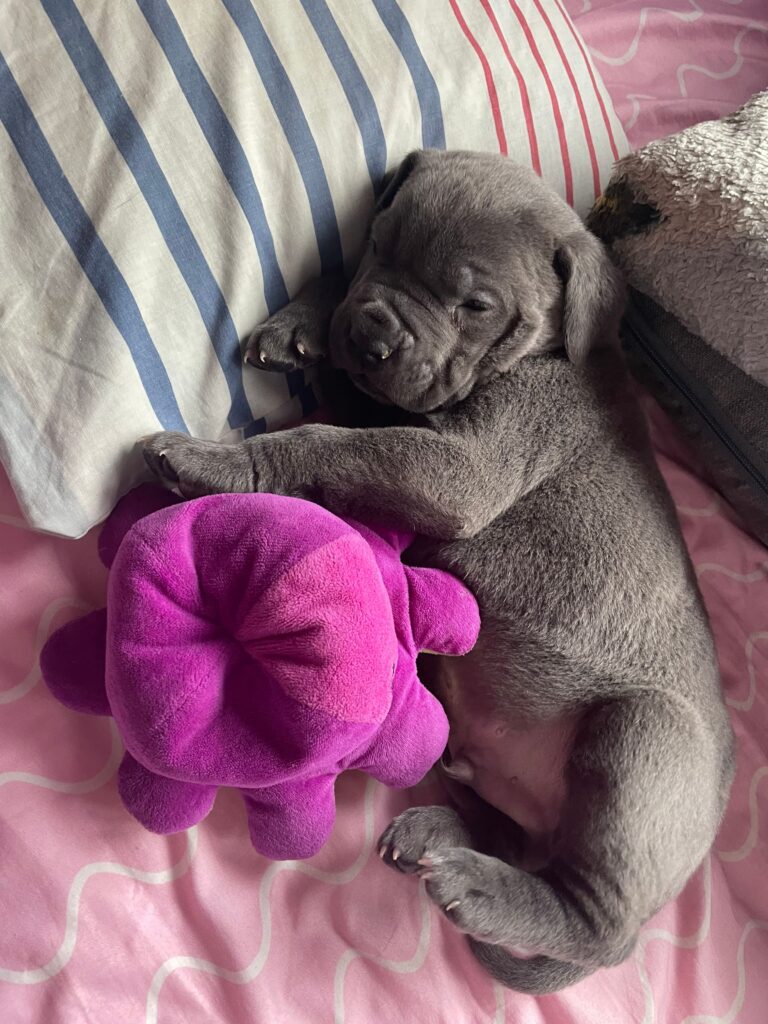
There isn’t one sleeping arrangement that works for every household. However, placing your puppy’s bed or crate near your bedroom during the early nights can have practical advantages. Your puppy can sense that they haven’t been completely abandoned, and you’ll be more likely to hear them when they wake and need the toilet.
If you’re choosing a sleeping surface for your new puppy, see our guide to the best puppy beds for comfortable and practical options.
Once your puppy becomes more comfortable, you can gradually work towards the long-term sleeping arrangement you want. Wherever your puppy sleeps, make sure the area is safe, comfortable and appropriate for their age and size.
Should You Use a Crate on the First Night?
If you plan to crate train your puppy, introduce the crate positively. Your puppy’s first experience shouldn’t involve being suddenly shut inside an unfamiliar crate and expected to remain silent for the entire night.
Allow them to investigate it and create positive associations with the space. Comfortable bedding may be appropriate depending on your puppy’s chewing and toilet habits. A crate should provide enough room for your puppy to stand, turn around and lie down comfortably.
If you’re still choosing a crate, see our guide to the best puppy crates for safe and comfortable sleep.
Crates should never be used as punishment. If you don’t plan to use a crate, a secure puppy-proofed area or appropriately sized playpen may be another option.
Expect Some Crying
Crying during the first night with a new puppy isn’t unusual. Your puppy isn’t deliberately trying to keep you awake. They may be frightened, lonely, uncomfortable or need the toilet. If your puppy cries, check what they might need.
A very young puppy may need a nighttime toilet break. Your puppy could also be uncomfortable or simply struggling with being alone in an unfamiliar environment. Keep your response calm and quiet. You can reassure your puppy without turning nighttime into an exciting play session. As your puppy becomes familiar with their surroundings and routine, nighttime settling will often become easier.
Should You Ignore a Puppy Crying at Night?
You don’t need to choose between completely ignoring your puppy and entertaining them every time they make a sound. If your puppy is crying persistently, check that they don’t need the toilet and aren’t showing signs of illness or distress.
Keep nighttime interactions quiet and boring. Take them for a toilet break, if necessary, provide calm reassurance and then help them settle again. Over time, you’ll become more familiar with your puppy’s normal behavior and routine. If crying is intense, persistent or accompanied by concerning symptoms, seek veterinary advice rather than assuming it is simply first-night nerves.
What If Your Puppy Wakes During the Night?
Night waking is normal for many young puppies. If your puppy wakes and appears to need the toilet, take them quietly to their designated toilet area. Keep lights and conversation to a minimum where practical. Avoid games or extended play because you want to reinforce the difference between daytime activity and nighttime toilet breaks.
Once your puppy has finished, calmly return them to their sleeping area. Very young puppies may need more than one toilet opportunity overnight. As your puppy grows and develops better bladder control, nighttime toilet trips will generally become less frequent.
Create a Simple Bedtime Routine
You can begin establishing a predictable bedtime routine from the first evening but keep your expectations realistic. A simple routine might involve a period of quiet activity, a final toilet opportunity and then settling into the sleeping area.
Avoid exhausting your puppy in an attempt to make them sleep through the night. Young puppies need plenty of sleep and shouldn’t be pushed into excessive exercise. Also remember that a newly arrived puppy may not yet be fully vaccinated. Ask your veterinarian about appropriate exercise and safe outdoor exposure for your puppy’s age and vaccination status. Consistency matters more than creating an elaborate routine.
What About Food and Water Before Bed?
Follow an age-appropriate feeding schedule rather than giving your puppy a large additional meal simply because bedtime is approaching. Keeping meals reasonably consistent can also help you learn when your puppy usually needs to toilet.
Fresh drinking water is important. Don’t routinely restrict your puppy’s access to water simply in an attempt to prevent nighttime accidents unless your veterinarian has specifically advised you to manage water intake for a medical reason. If you’re unsure about your puppy’s feeding schedule or water needs, ask your veterinarian for advice appropriate to their age and health.
Common First-Night Mistakes to Avoid
The first night doesn’t have to be perfect, but a few common mistakes can make settling more difficult. Avoid creating an overly exciting evening filled with visitors and vigorous play. Don’t punish your puppy for crying or for having a toilet-training accident. Try not to move their sleeping area to a completely different location every time they make a sound. Consistency will eventually help the environment become familiar.
Most importantly, don’t expect a very young puppy to behave like an adult dog. Night waking, accidents and uncertainty are normal parts of the adjustment period.
What to Expect the Next Morning
You might wake after a wonderfully quiet night, the first night with your puppy. Or you might also wake feeling as though you’ve completed a night shift. Either outcome can be normal. Take your puppy to their toilet area when they wake and begin the morning routine calmly. Offer their meal according to their normal feeding schedule and give them opportunities for rest throughout the day.
Avoid judging the entire puppy experience by one difficult night. Your puppy is still learning what their new home sounds like, where they sleep, where they toilet and who they can rely on. Routine develops through repetition.
Frequently Asked Questions

Is it normal for a puppy to cry on the first night?
Yes, some puppies cry or whine during their first nights in a new home. They have experienced a significant change in environment and may be separated from their mother, littermates or familiar carers.
Stay calm, check whether your puppy needs the toilet or appears uncomfortable, and provide quiet reassurance. Persistent or unusual distress, particularly when accompanied by signs of illness, should be discussed with a veterinarian.
How long does it take a new puppy to settle at night?
There is no exact number of nights that applies to every puppy. Some begin settling relatively quickly, while others need more time to adjust to their new environment and sleeping routine.
Age, previous experiences, temperament and your household routine can all influence the adjustment period. Look for gradual progress rather than expecting your puppy to sleep perfectly within a particular number of days.
Should my puppy sleep in my bedroom?
Your puppy doesn’t necessarily need to sleep permanently in your bedroom. During the first few nights, however, keeping their sleeping area nearby can make it easier to reassure them and respond to nighttime toilet needs. You can gradually transition the sleeping area later if you want your puppy to sleep elsewhere in the home.
How often will my puppy need to toilet during the night?
This varies with age and the individual puppy. Young puppies have limited bladder control and may need one or more nighttime toilet breaks. As they mature, they generally become capable of going longer between toilet trips. Rather than expecting a fixed timetable, watch your puppy and learn their routine.
What if my puppy won’t settle at all?
First check their basic needs. Make sure they have had an opportunity to toilet, aren’t too hot or cold and aren’t showing signs of illness. Keep the environment quiet and offer calm reassurance.
If your puppy appears unusually distressed, has vomiting or diarrhoea, refuses food, seems lethargic or shows other concerning symptoms, contact your veterinarian.
Things to Remember About Your First Night With a New Puppy
Your first night together is the beginning of an adjustment period, not a test that you or your puppy need to pass. Prepare a safe and comfortable sleeping area, keep the evening relatively calm and give your puppy a toilet opportunity before bedtime. Expect that a young puppy may wake during the night and respond calmly when they need you.
Don’t punish crying or accidents, and don’t expect an unfamiliar puppy to understand your household routine immediately. With patience, consistency14563652 and time, your puppy can gradually learn that their new home is a safe place to eat, sleep, play and rest.