Learning how to train a puppy to walk on a lead is an important part of keeping them safe and confident outdoors. Puppies do not naturally understand that they should walk calmly beside a person, so patient practice is essential. With suitable equipment, positive reinforcement and short training sessions, your puppy can develop walking habits that make everyday outings more enjoyable.
Table of Contents
Why Lead Training Matters
Lead training helps your puppy remain close to you around roads, people, other animals and unfamiliar surroundings. It also teaches them to respond to your movements instead of pulling towards every interesting sight and smell. The RSPCA’s lead-training guidance recommends comfortable, correctly fitted equipment and frequent rewards when the lead remains loose
Starting in a calm environment allows your puppy to build confidence before facing busy footpaths, traffic and other distractions. Training should always progress at a pace your puppy can manage without becoming frightened or overwhelmed.
What You Need Before Lead Training
Choose lightweight equipment that fits your puppy’s current size. Avoid buying an oversized harness for them to grow into because a loose harness may allow them to escape.
| Item | Why It Is Needed |
|---|---|
| Well-fitted harness | Spreads lead pressure across a broader area of the body |
| Lightweight fixed-length lead | Provides control without adding unnecessary weight |
| Small training treats | Rewards attention and calm walking |
| Treat pouch | Keeps rewards easy to reach during training |
| Waste bags | Essential for responsible outdoor walks |
Our guide to the best puppy harnesses explains how to measure your puppy and choose a secure, comfortable design.
How to Train a Puppy to Walk on a Lead Step by Step
Step 1: Introduce the Harness Gradually
Place the harness on the floor and allow your puppy to investigate it. Reward them for calmly approaching or sniffing it. Next, hold the harness near their body for a moment, reward them and remove it.
When your puppy appears relaxed, put the harness on for a few seconds indoors. Gradually increase the time while offering praise and treats. Check that it does not rub, twist or restrict movement.
Step 2: Introduce the Lead Indoors
Attach a lightweight lead to the harness while your puppy is indoors. Hold it loosely and encourage your puppy to move with you for a few steps. Reward calm behaviour and keep the experience relaxed.
Do not leave your puppy unattended with the lead attached. A trailing lead can become caught on furniture or other objects. Remove the lead when the practice session finishes.
Step 3: Reward Attention and Position
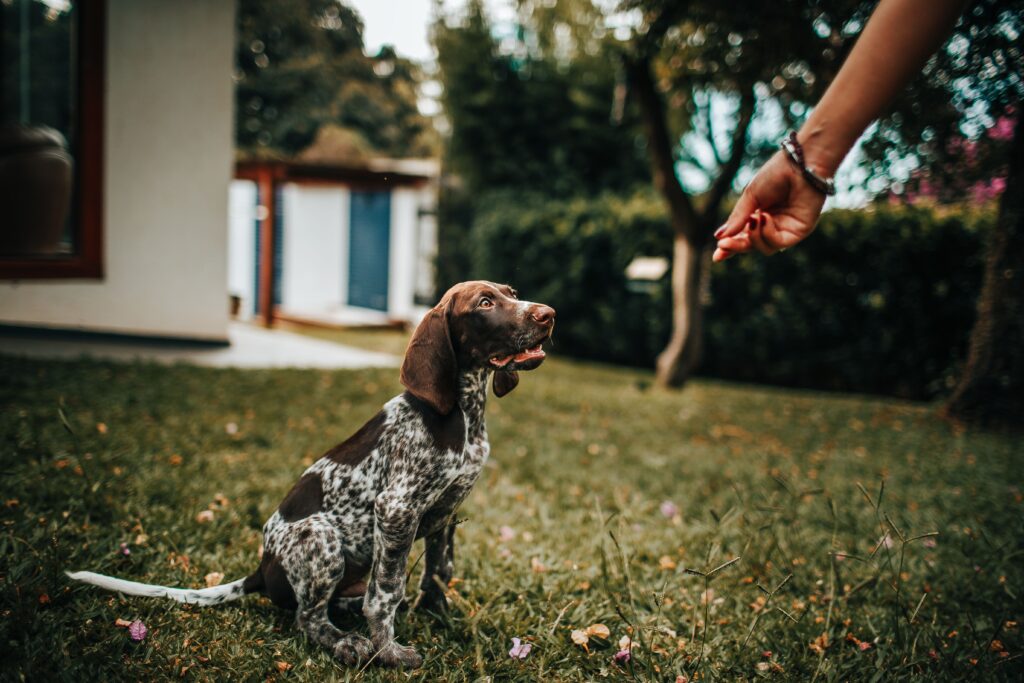
Begin in a quiet room with your puppy beside you. Say their name or use a consistent cue, then reward them when they look towards you. Take one or two steps and offer another reward when they follow with the lead loose.
When learning how to train a puppy to walk on a lead, reward the behaviour you want instead of waiting for your puppy to make a mistake. Frequent rewards during the early sessions help them understand that staying close to you is worthwhile.
Step 4: Practise Taking Short Walks Indoors
Walk several steps across the room and reward your puppy while the lead remains loose. Change direction gently so they learn to watch where you are going. Keep your voice calm and avoid pulling them into position. Once your puppy can follow you indoors, practice in a securely enclosed garden or another quiet, familiar area.
Step 5: Stop When the Lead Becomes Tight
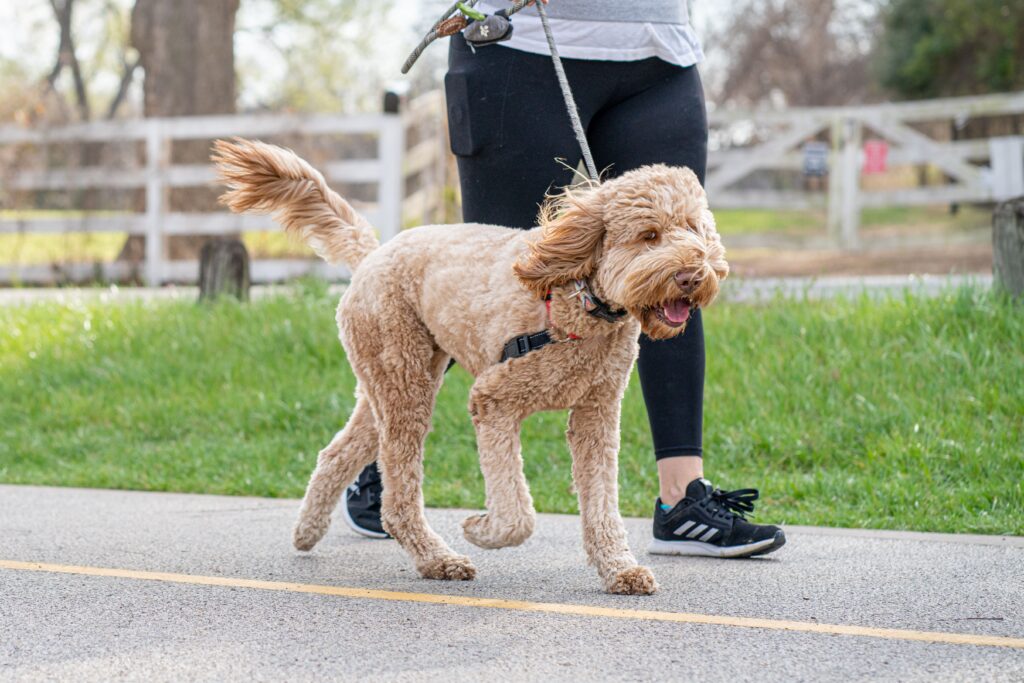
If your puppy pulls, stop walking and wait calmly. The Dogs Trust loose-lead walking guide recommends stopping when the lead tightens and continuing only after it becomes loose again.
Move forward again when the lead becomes loose or your puppy turns back towards you. Reward them when they return to the correct position. Avoid jerking the lead or dragging your puppy backwards. Pulling against them can cause discomfort and may encourage them to pull harder.
Step 6: Introduce Outdoor Distractions Slowly
An important part of learning how to train a puppy to walk on a lead is controlling the level of difficulty. Start in a quiet outdoor location before progressing to busier footpaths, parks and areas with other dogs.
Increase only one challenge at a time, such as distance, noise or the number of people nearby. If your puppy stops responding to treats or appears worried, move farther away from the distraction and make the session easier.
Step 7: Practise Stopping at Roads
Teach your puppy to pause beside you before crossing a road. Stop at the kerb, ask for their attention and reward them for waiting. Cross only when it is safe, keeping your puppy close and the lead under control.
Common Lead-Training Mistakes
- Starting in a busy location before practising indoors.
- Using equipment that is too heavy, loose or restrictive.
- Jerking the lead or dragging the puppy forwards.
- Continuing after the puppy becomes tired or overwhelmed.
- Allowing pulling to move the puppy towards something exciting.
- Forgetting to reward calm walking and attention.
- Expecting perfect walks immediately.
How Long Should Training Sessions Be?
Keep early sessions to just a few minutes and finish while your puppy is still engaged. Several brief sessions throughout the day are usually easier for a young puppy than one long lesson.
Watch your puppy rather than relying on a strict time limit. End the session if they become distracted, frustrated, tired or reluctant to continue. A small success followed by rest is more useful than pushing through an unsuccessful lesson.
How Long Does It Take to Train a Puppy to Walk on a Lead?
Every puppy learns at a different pace. Some understand the basics within several sessions, while others need weeks of gradual practice. Consistency matters more than speed when you are learning how to train a puppy to walk on a lead.
Progress may not be perfectly steady. A puppy that walks calmly at home may struggle in an exciting new place. Reduce the difficulty, reward small improvements and continue practising.
When Is a Puppy Ready for Longer Walks?
Lead-training progress is only one factor to consider. Your puppy’s age, breed, health, vaccination status, fitness, weather and walking surface can all affect how much exercise is appropriate. Ask your veterinarian for advice suited to your puppy.
Increase walking time gradually and watch for lagging behind, repeatedly sitting down, heavy panting or reluctance to continue. Allow plenty of time for sniffing and resting instead of treating every walk as continuous exercise.
Tips for a Successful Training Session
- Prepare treats, waste bags and equipment before leaving home.
- Train when your puppy is alert but not overexcited.
- Begin each new skill in a quiet location.
- Reward your puppy before they become distracted.
- Use the same walking cues consistently.
- Finish each session with an achievable success.
Frequently Asked Questions
At what age should I begin lead training?
You can begin gentle harness and lead practice indoors after your puppy has settled into the home. Before walking in public places, ask your veterinarian when it is safe based on your puppy’s vaccination status and local disease risks.
Should I use a collar or a harness?
A correctly fitted harness is often comfortable for lead training because it spreads pressure across a broader area instead of concentrating it around the neck. Your puppy may still need an identification collar where appropriate.
What should I do if my puppy refuses to walk?
Do not drag your puppy. Pause, encourage them with a treat and move to a quieter location if necessary. Check that the harness fits comfortably and that the ground is not too hot, cold or difficult to walk on. Seek veterinary advice if your puppy appears painful or repeatedly refuses to move.
What if my puppy bites the lead?
Keep the lead still rather than turning it into a tug game. Ask for another simple behaviour, reward your puppy and redirect them to an appropriate toy after the session. Our guide to the best puppy toys can help you choose safer play options.
Key Things to Remember
- Begin with harness and lead practice indoors.
- Use lightweight, correctly fitted equipment.
- Reward attention and loose-lead walking.
- Stop calmly when the lead becomes tight.
- Introduce distractions gradually.
- Keep sessions brief, positive and achievable.
- Knowing how to train a puppy to walk on a lead requires patience, repetition and realistic expectations.
Every smell, sound and movement can feel exciting to a young puppy. By practising in small steps and rewarding calm choices, you can build walking habits that continue into adulthood.