How long can you leave a puppy alone? The answer depends on your puppy’s age, toilet needs, health, temperament and previous experience with being separated from you.
Bringing a new puppy home for the first time is exciting, but young puppies require frequent feeding, toilet breaks, supervision and companionship. They cannot immediately cope with being left for an entire working day.
Alone-time training should begin with very short separations and increase gradually. This guide provides cautious age-based ranges, signs that your puppy is struggling and practical ways to help them feel more secure.
Table of Contents
How Long Can You Leave a Puppy Alone?
There is no exact time that suits every puppy. Age affects bladder control and feeding needs, but emotional readiness is equally important. A puppy that can physically avoid a toilet accident may still feel distressed when left alone.
The table below provides a cautious planning guide. These times are possible upper ranges after gradual training—not the amount of time you should use during your puppy’s first practice session.
| Puppy Age | Possible Alone-Time Range | Important Considerations |
|---|---|---|
| 8 to 10 weeks | A few minutes, gradually building towards 30 to 60 minutes | Requires frequent supervision, meals and toilet breaks. |
| 10 to 12 weeks | Gradually building towards 1 to 2 hours | Many puppies still require very frequent toilet and comfort breaks. |
| 3 to 4 months | Approximately 2 to 3 hours | Increase gradually and arrange help for longer absences. |
| 5 to 6 months | Approximately 3 to 4 hours | Only if the puppy remains relaxed and can manage their toilet needs. |
| Over 6 months | Up to 4 hours as a general routine maximum | Some puppies and dogs will need shorter periods. |
Important: When asking “how long can you leave a puppy alone comfortably?”, remember that your puppy may need considerably less time than the table suggests. Watch their behaviour and speak with your veterinarian if you are uncertain.
The Dogs Trust guide to leaving dogs alone recommends building up time apart very gradually and avoiding routine absences longer than four hours. If you need to be away longer, arrange for somebody to visit, provide a toilet break and spend time with your puppy.
Why Your Puppy’s Age Matters
Very young puppies have small bladders and limited control over when they need to relieve themselves. They also need regular meals, social interaction, sleep and supervision to prevent injuries or destructive behaviour.
As your puppy matures, their bladder control and confidence may improve. However, age alone does not mean they are prepared for a long absence. Alone time must still be introduced gradually.
How to Teach Your Puppy to Stay Home Alone
Being comfortable alone is a skill that puppies need to learn. Begin while you are still at home and progress in small stages.
Start With Separation Inside the Home
Place your puppy in a safe area with an appropriate activity. Step behind a baby gate or move a short distance away for a few seconds. Return while your puppy is still calm.
Repeat the exercise and gradually increase the time. Once your puppy can remain relaxed while you are elsewhere in the home, briefly step outside before returning.
The Blue Cross guide to preventing separation anxiety in puppies recommends beginning with short separations and increasing the time according to the individual puppy’s progress.
Create a Safe Puppy Area
Your puppy needs a secure and comfortable space where they cannot reach electrical cords, medicines, unsuitable plants or small objects that could be swallowed.
A puppy-proofed room or exercise pen may provide more movement for daytime absences. A properly introduced puppy crate can support short periods of rest, but it should not be used to extend the time your puppy is left alone.
If you’re choosing a crate for your puppy, see our guide to the best puppy crates for safe and comfortable options.
The area may include:
- A comfortable resting place
- Fresh drinking water
- A safe temperature and adequate ventilation
- A suitable toy or food puzzle
- An appropriate toilet arrangement when necessary
Only leave toys that you know are safe for your puppy’s chewing style. Remove items with loose pieces, stuffing, batteries or parts that could be swallowed.
Provide Suitable Enrichment
A carefully selected activity can help your puppy settle during a short absence. Consider one of the best puppy toys, a durable food-dispensing toy or another enrichment item approved for unsupervised use.
Enrichment can reduce boredom, but it cannot compensate for leaving a puppy alone longer than they can cope. Some puppies may also ignore food when distressed.
If your puppy regularly damages belongings while you are away, review our guide explaining how to stop puppy chewing.
Meet Their Needs Before Leaving
Before leaving your puppy alone:
- Provide a toilet break.
- Offer their scheduled meal if appropriate.
- Provide gentle, age-appropriate activity.
- Allow time for your puppy to settle.
- Check that their safe area has water and no hazards.
Follow your regular puppy toilet-training routine immediately before leaving. Do not attempt to exhaust your puppy with excessive exercise.
Keep Departures and Arrivals Calm
Avoid creating an exciting or emotional routine every time you leave. Prepare your puppy’s safe area, provide their activity and leave calmly.
When you return, greet your puppy gently and take them to their toilet area. Calm arrivals help make your movements in and out of the home feel ordinary.
Use a Camera if Possible
A basic indoor camera can help you understand what your puppy does after you leave. A puppy who appears calm when you close the door may begin pacing, barking or trying to escape several minutes later.
Recordings can help you determine whether the training is progressing comfortably. Avoid relying on two-way audio if hearing your voice without seeing you makes your puppy more distressed.
How Long Can You Leave a Puppy Alone While Working?
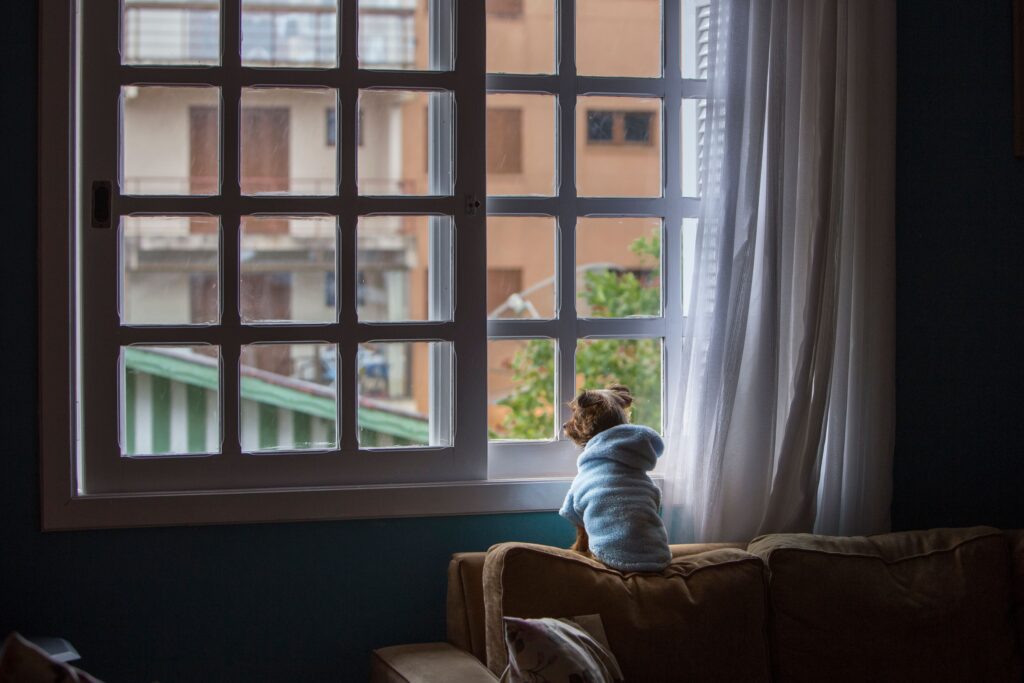
A young puppy cannot be left alone for an entire working day. If you work outside the home, arrange support from a trusted family member, neighbour, pet sitter or suitable puppy-care service.
The person can provide a toilet break, fresh water, companionship and age-appropriate activity. Make sure anyone caring for your puppy follows the same feeding, toilet and training routines.
As your puppy matures, they may manage longer periods, but regular working days should still be broken up when they exceed your puppy’s comfortable limit.
Signs Your Puppy Is Not Coping Alone
Possible signs of separation-related distress include:
- Persistent barking, whining or howling
- Pacing or an inability to settle
- Heavy panting or drooling when it is not hot
- Repeated toilet accidents despite appropriate training
- Destructive chewing around doors or windows
- Frantic scratching or escape attempts
- Refusing a favourite food toy after you leave
These behaviours should not be treated as disobedience. Reduce the duration of your absences and speak with your veterinarian or a qualified reward-based behaviour professional if the distress continues.
Common Mistakes When Leaving a Puppy Alone
Leaving Too Much Too Soon
Do not expect a new puppy to move immediately from constant companionship to several hours alone. Begin with seconds or minutes and progress gradually.
Depending Only on Age
Age-based tables are planning guides, not guarantees. Your puppy’s health, temperament, training progress and emotional state must also be considered.
Skipping Toilet Breaks
Avoid expecting a young puppy to hold their bladder beyond their physical ability. Arrange help when your absence will be too long.
Leaving Unsafe Toys
A toy that is safe during supervised play may not be suitable when your puppy is alone. Check every item for damage and consider your puppy’s individual chewing habits.
Punishing Accidents or Damage
Your puppy will not connect punishment after your return with an accident that occurred earlier. Punishment may increase fear without teaching them how to cope alone.
Ignoring Signs of Distress
Do not continue increasing the duration if your puppy is struggling. Return to a shorter period during which they previously remained relaxed.
Real-Life Example
Jade recently brought home a ten-week-old Labrador puppy. On her first day back at work, she left him alone for four hours. When she returned, she found several toilet accidents, a chewed table leg and a distressed puppy.
Jade adjusted her routine instead of punishing him. She arranged for a family member to visit during the day, introduced short absences and provided a carefully selected food toy.
Over time, she gradually increased the duration while watching her puppy on a camera. The puppy learned to settle because the training progressed according to his comfort rather than Jade’s work schedule.
Frequently Asked Questions
How long can you leave a puppy alone during the day?
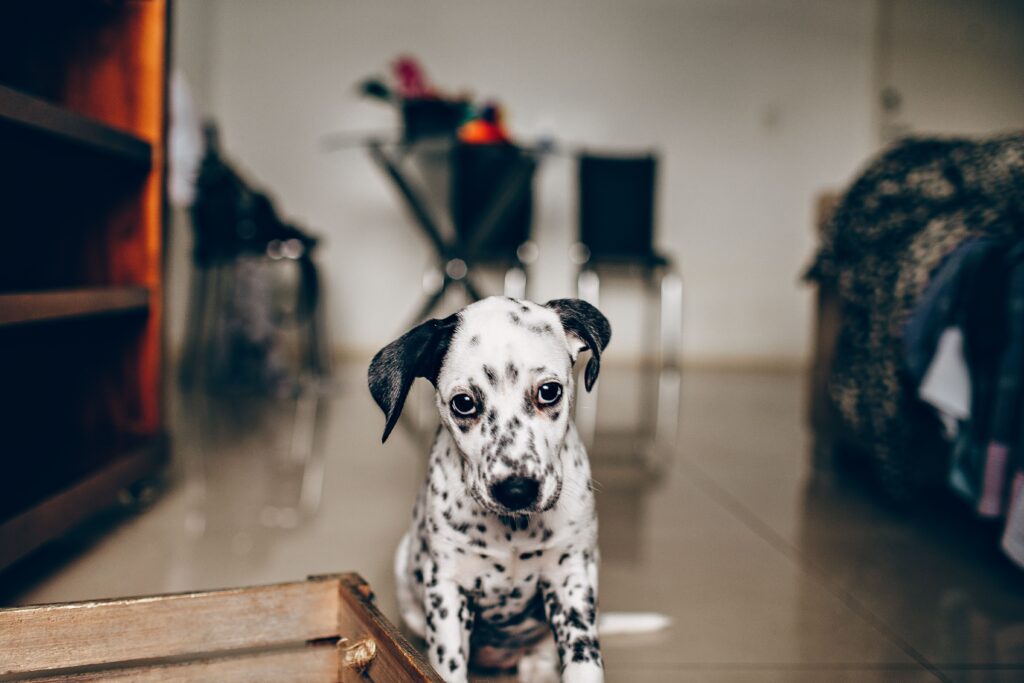
Very young puppies should only be left for brief, gradually introduced periods. Older puppies may work towards several hours, but individual comfort, toilet needs and training progress are more important than age alone. Avoid routinely exceeding four hours, even for an older puppy.
Can I leave an eight-week-old puppy alone?
You can begin teaching an eight-week-old puppy to cope with very short separations. Start with seconds or minutes while you remain nearby. Arrange care rather than expecting them to manage a long absence.
Can a puppy be left alone while I work?
A young puppy cannot manage an entire working day alone. Arrange visits from a family member, neighbour or pet sitter to provide toilet breaks, companionship and appropriate care.
Should I leave my puppy in a crate?
A positively introduced crate can provide a safe place for short periods. It should not be used for prolonged daytime confinement. A secure exercise pen or puppy-proofed room may be more suitable when additional space is required.
Can leaving a puppy alone cause separation anxiety?
Being left for longer than a puppy can comfortably manage may contribute to separation-related distress. Gradual training cannot guarantee prevention, but it can help your puppy learn that short absences are safe and temporary.
Quick Action Plan
If you are asking “how long can you leave a puppy alone?”, start with these steps:
- Begin with separations lasting only seconds or minutes.
- Increase the time only while your puppy remains relaxed.
- Provide a secure, puppy-proofed area and fresh water.
- Offer only enrichment items that are safe without supervision.
- Provide a toilet break before leaving.
- Use a camera to check for hidden signs of distress.
- Arrange suitable care when you will be away too long.
Key Things to Remember
- Age-based time ranges are only planning guides.
- Young puppies require frequent toilet breaks and companionship.
- Begin alone-time training with very short separations.
- Never punish accidents or separation-related distress.
- A crate should not be used for excessive confinement.
- Seek professional help if your puppy shows persistent distress.
Final Thoughts
The answer to “how long can you leave a puppy alone?” depends on much more than age. Your puppy’s physical needs, temperament and emotional response should determine how quickly their training progresses.
Start with very short separations, provide a safe environment and arrange help whenever your schedule exceeds your puppy’s comfortable limit. Patient, gradual practice can help your puppy develop greater confidence and independence.