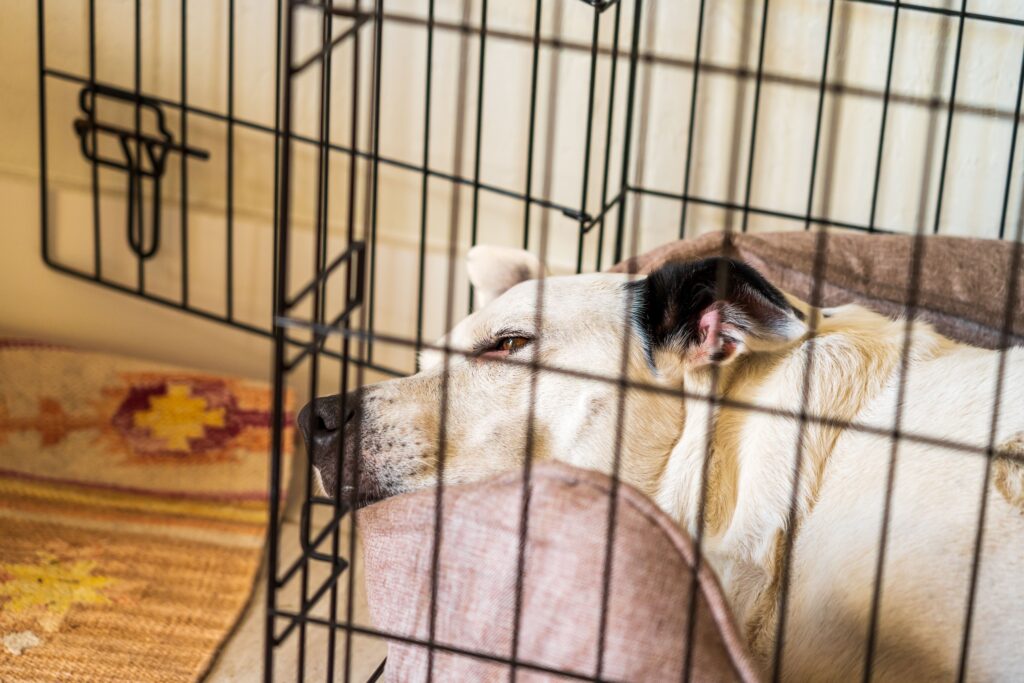
Learning how to crate train a puppy can help you create a safe and predictable resting space for your new companion. When introduced correctly, a crate can support toilet training, encourage healthy routines and provide somewhere quiet for your puppy to relax.
The crate should never be used for punishment or excessive confinement. Your puppy should learn to enter willingly and associate the space with comfort, treats, rest and other positive experiences.
Why this matters: Crate training is not simply about containing your puppy. The goal is to help them feel comfortable resting independently for appropriate periods while knowing that their needs will still be met.
Table of Contents
How to Crate Train a Puppy Step by Step
Successful crate training happens gradually. The following steps will help you introduce the crate without frightening or overwhelming your puppy.
Step 1: Choose the Right Crate
Choosing the correct size is an important part of learning how to crate train a puppy. Your puppy should be able to stand, sit, turn around, lie down and stretch comfortably.
A crate that is too small will be uncomfortable. However, a crate that is unnecessarily large may allow your puppy to sleep at one end and use the other as a toilet area. If your puppy will grow significantly, consider a larger crate with an adjustable divider.
Our guide to choosing the best puppy crates explains the main crate styles, sizing considerations and safety features.
| Crate Type | Best For |
|---|---|
| Wire crate | Provides good ventilation and visibility and commonly includes an adjustable divider. |
| Plastic crate | Creates a more enclosed space and may be suitable for certain types of travel. |
| Soft-sided crate | Suitable for calm puppies under supervision but generally unsuitable for persistent chewers. |
The Dogs Trust crate-training guide recommends using a sturdy crate that allows a puppy to stand, turn around, lie down and stretch out comfortably.
Step 2: Prepare a Comfortable Space
Place the crate in a calm part of the home where your puppy can rest without feeling completely separated from the family. Avoid locations that are excessively hot, cold, noisy or exposed to direct sunlight.
You may add comfortable bedding if your puppy does not chew or destroy it. Include safe items suited to your puppy’s age, size and chewing habits. Inspect everything regularly and remove damaged items.
- A comfortable crate mat or suitable bed
- A safe blanket if your puppy does not chew fabric
- An age-appropriate chew toy
- A secure, non-spill water bowl when appropriate
Step 3: Allow Your Puppy to Explore
A key part of learning how to crate train a puppy is allowing your puppy to investigate without being forced inside. Secure the door in an open position so it cannot swing towards or frighten them.
Place a few treats or pieces of your puppy’s regular food near the entrance. As your puppy becomes comfortable, place the rewards farther inside. Let them enter and leave freely during these early sessions.
You can also place familiar puppy toys inside the crate. Praise your puppy calmly whenever they choose to investigate or enter.
Step 4: Build Positive Associations
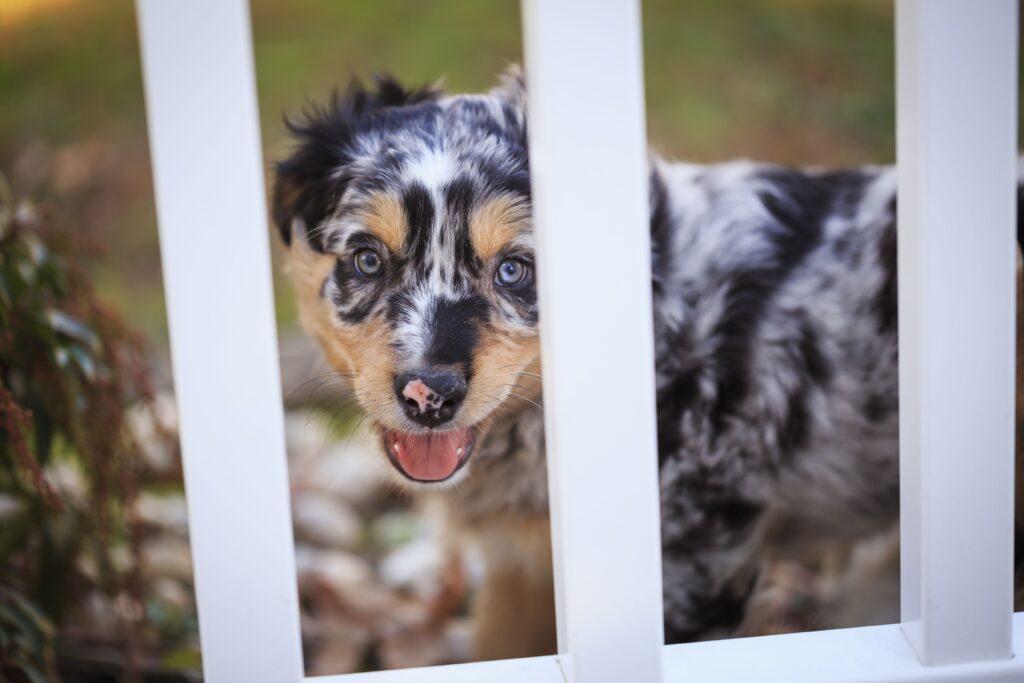
Your puppy should associate the crate with pleasant experiences. You can encourage this by:
- Placing treats inside the crate
- Feeding meals near the entrance before gradually moving the bowl inside
- Offering a safe chew or food puzzle during crate time
- Praising your puppy when they enter voluntarily
- Allowing your puppy to rest without being disturbed
The RSPCA’s reward-based training guidance explains that rewarding desired behaviour helps dogs understand which actions should be repeated.
Avoid placing your puppy inside after unwanted behaviour. If the crate is regularly associated with punishment, your puppy may begin avoiding it.
Step 5: Introduce the Closed Door
Once your puppy confidently enters the crate, begin introducing the closed door. Start while you remain beside them and keep the first sessions very short.
Close the door for a few seconds, calmly provide a treat and open it again while your puppy is relaxed. Gradually increase the duration according to your puppy’s response. Do not immediately progress from a few seconds to a long session.
Example: Your puppy enters the crate to collect a treat. You gently close the door for several seconds while sitting beside them. If they remain relaxed, reward them and open the door. During later sessions, increase the duration gradually.
Step 6: Build a Predictable Daily Routine
A regular routine makes it easier to understand how to crate train a puppy successfully. Use the crate at predictable times rather than only when you need your puppy out of the way.
Appropriate times may include:
- During scheduled naps
- After a toilet break and gentle play
- At bedtime
- For short periods while you complete household tasks
- When your puppy needs a quiet place to relax
Be careful not to make these common puppy training mistakes, such as moving too quickly, using punishment or following inconsistent rules.
Step 7: Gradually Increase Your Distance
When your puppy can remain calm with the door closed, begin moving a small distance away. Take one step back, return and reward them before opening the door.
Over several sessions, gradually increase the distance. You can then briefly move out of sight before returning. Keep departures and arrivals calm so they become an ordinary part of the routine.
Progress at your puppy’s pace. If they become distressed, shorten the duration or distance and return to a stage where they were comfortable.
What If Your Puppy Cries in the Crate?
Before deciding what to do, consider why your puppy may be crying. Ask yourself:
- Do they need to go to the toilet?
- Are they hungry or thirsty?
- Are they uncomfortable or too hot?
- Have they received appropriate exercise and interaction?
- Was the length of the session increased too quickly?
Do not use a “cry it out” approach if your puppy is genuinely distressed. Intense or continuing crying, frantic scratching, excessive drooling and repeated escape attempts can indicate that the training has progressed too quickly.
End the session calmly if necessary and return to shorter, easier sessions later. If the distress continues, seek advice from your veterinarian or a qualified reward-based trainer.
Overnight Crate Training
Night-time can be one of the most challenging parts of learning how to crate train a puppy. During the first few nights, placing the crate near your bed may help your puppy feel less isolated and allow you to notice when they need the toilet.
Young puppies may need one or more overnight toilet breaks. Follow the same calm routine each time:
- Take your puppy directly to their toilet area.
- Allow enough time for them to relieve themselves.
- Offer quiet praise.
- Return them to the crate without beginning playtime.
- Keep lights, voices and activity low.
Our puppy toilet-training guide provides a routine for preventing accidents and encouraging successful toilet trips.
Common Crate-Training Mistakes
Using the Crate as Punishment
If the crate is mainly used after unwanted behaviour, your puppy may learn to fear or avoid it. Keep the crate connected with rest, safety and positive experiences.
Leaving a Puppy Crated Too Long
Young puppies need regular toilet breaks, exercise, social interaction, training and opportunities to explore. A crate is a temporary management and resting space, not somewhere for all-day confinement.
Moving Too Quickly
Closing the door for an extended period before your puppy feels comfortable can create distress and slow the training process. Increase duration and distance gradually.
Ignoring Signs of Distress
Mild uncertainty and serious distress are not the same. Reduce the difficulty if your puppy appears frightened, panicked or overwhelmed.
Using an Unsafe Setup
Inspect the crate, bedding and toys regularly. Remove damaged items and anything that could catch, break apart or become a choking hazard. Consider removing your puppy’s collar or harness when they are crated if it could catch on the crate.
Following an Inconsistent Routine
Using the crate unpredictably can make the process confusing. A regular routine helps your puppy understand when it is time to rest.
When Should You Seek Professional Help?
Speak with your veterinarian or a qualified reward-based trainer if your puppy:
- Shows extreme fear when approaching the crate.
- Injures themselves while attempting to escape.
- Panics despite gradual training.
- Refuses treats or meals near the crate.
- Continues showing significant distress during careful practice.
Crate training is not a cure for separation anxiety. A professional can help you identify the cause of your puppy’s distress and create a suitable training plan.
Frequently Asked Questions
How long does crate training take?
Some puppies become comfortable within several days, while others need weeks of gradual practice. Your puppy’s age, previous experiences and temperament can all affect their progress.
Should I put toys in my puppy’s crate?
You can provide an age-appropriate toy or food puzzle if it is safe for your puppy’s chewing style. Inspect toys regularly and remove anything damaged or small enough to swallow.
Is it cruel to crate train a puppy?
Learning how to crate train a puppy gradually and positively should create a comfortable resting space rather than a punishment area. Crating becomes inappropriate when a puppy is forced inside, left distressed or confined for excessive periods.
Should my puppy sleep in the crate every night?
Many owners use a crate during puppyhood to create a consistent bedtime routine and support toilet training. As your puppy matures, you can decide whether the crate remains their regular sleeping area.
Quick Crate-Training Action Plan
If you are beginning to learn how to crate train a puppy, follow these steps:
- Choose an appropriately sized crate.
- Prepare a comfortable and safe environment.
- Allow your puppy to explore at their own pace.
- Use treats, meals and praise to create positive associations.
- Begin with very short closed-door sessions.
- Increase time and distance gradually.
- Respond appropriately to signs of distress or toilet needs.
Key Things to Remember
- Crate training should use positive reinforcement.
- Never force your puppy into the crate.
- Keep early training sessions short and successful.
- Build a predictable daily routine.
- Never use the crate as punishment.
- Increase time alone according to your puppy’s progress.
Final Thoughts
Learning how to crate train a puppy requires patience, consistency and an understanding of your puppy’s individual needs. When introduced thoughtfully, the crate can become a comfortable place where your puppy rests, feels secure and develops healthy routines.
The goal is not simply to make your puppy remain inside a crate. It is to build their confidence and help them feel comfortable using the space voluntarily.