A puppy exercise guide by age can help you balance safe activity, mental stimulation and essential rest as your puppy grows. Puppies need opportunities to play, explore and learn, but their developing bones and joints are not ready for the strenuous exercise performed by adult dogs.
Too little activity may contribute to boredom and restless behavior, while too much forced or high-impact exercise may place unnecessary stress on a growing puppy’s body. The right routine should include gentle walks, self-directed play, training, sniffing activities and plenty of sleep.
This puppy exercise guide by age explains what to expect during each stage, which activities are suitable and how to recognise when your puppy needs more rest. If your puppy has a health condition or mobility problem, ask your veterinarian to create an individual exercise plan.
If your puppy has only recently arrived, our guide to the first week with a new puppy will help you establish a manageable daily routine.
Table of Contents
Why Exercise Is Important for Puppies
Age-appropriate exercise helps your puppy develop coordination, balance and confidence. It also provides opportunities to explore unfamiliar sounds, surfaces, people and environments in a controlled way.
Exercise is valuable for mental wellbeing as well as physical development. Puppies are naturally curious, and activities such as sniffing, searching for treats and learning simple cues allow them to use their brains without requiring strenuous movement.
However, the purpose of exercise should not be to exhaust your puppy. Growing puppies require frequent rest, and repeatedly pushing them beyond their comfortable limit can create negative associations with walking and play. The RSPCA Australia puppy exercise guide recommends balancing physical activity with mental stimulation and rest.
What Determines How Much Exercise a Puppy Needs?
Age is a useful starting point, but it is not the only factor that determines how much activity is suitable. Consider all the following when planning your puppy’s routine:
- Breed: Working and sporting breeds may have different energy levels from companion breeds.
- Adult size: Large and giant breeds generally take longer to reach physical maturity.
- Health: Joint, heart, breathing or mobility conditions can affect safe exercise.
- Personality: Some puppies enjoy constant exploration, while others prefer shorter, quieter outings.
- Weather: Heat, cold and humidity can change how much activity is safe.
- Vaccination status: Your veterinarian can advise where your puppy can explore safely based on local disease risks.
- Previous activity: Exercise should be increased gradually rather than suddenly.
Is the Five-Minute Exercise Rule Accurate?
You may have heard that a puppy should receive five minutes of exercise for every month of age, once or twice daily. For example, this rule suggests that a four-month-old puppy should walk for approximately 20 minutes.
This formula is easy to remember, but it should not be treated as an exact medical rule. It does not account for breed, health, pace, terrain, temperature or the difference between a relaxed sniffing walk and vigorous exercise.
The PDSA’s veterinary guidance on puppy exercise explains that there is no scientific evidence supporting the five-minute rule as a universal formula. Watch your puppy’s body language, allow frequent breaks and ask your veterinarian for personalized guidance.
Puppy Exercise and Walking Guide by Age
The puppy exercise chart below provides an age-by-age guide to suitable activities and exercise focus. These are practical starting points rather than strict daily limits, and your puppy should finish most activities appearing comfortable and willing rather than exhausted, sore or reluctant to continue.
| Puppy age | Exercise focus | Suitable activities |
|---|---|---|
| 8 to 12 weeks | Confidence and gentle exploration | Short play, handling, basic training and safe exploration |
| 3 to 4 months | Brief walks and new experiences | Sniffing walks, gentle games and reward-based training |
| 4 to 6 months | Gradually building coordination | Varied walks, scent games, play and basic obedience |
| 6 to 12 months | Managing adolescent energy | Longer gradual outings, training, swimming and enrichment |
| 12 to 18 months and older | Transitioning towards adult exercise | Breed-appropriate activities introduced gradually |
Exercise for Puppies Aged 8 to 12 Weeks
Young puppies usually experience brief bursts of energy followed by long periods of sleep. At this stage, exercise should focus on gentle play, confidence building and exploring safe surroundings.
Ask your veterinarian where your puppy can safely walk before completing their vaccination course. Socialisation should not be completely postponed, but it needs to occur in carefully managed environments. You may be able to carry your puppy outdoors, use a clean private garden or arrange meetings with healthy, vaccinated dogs.
Our guide on how to socialize a puppy explains how to introduce new experiences without overwhelming your puppy.
Suitable activities at this age include:
- Several brief, self-paced play sessions
- Gentle games with soft puppy toys
- Short name-recognition and recall exercises
- Searching for a few pieces of food
- Exploring safe surfaces and household environments
- Calm handling of the paws, ears and body
Expert tip: Stop while your puppy is still comfortable. Very young puppies may become mouthy, excitable or clumsy when they need sleep rather than more activity.
Exercise for Puppies Aged 3 to 4 Months
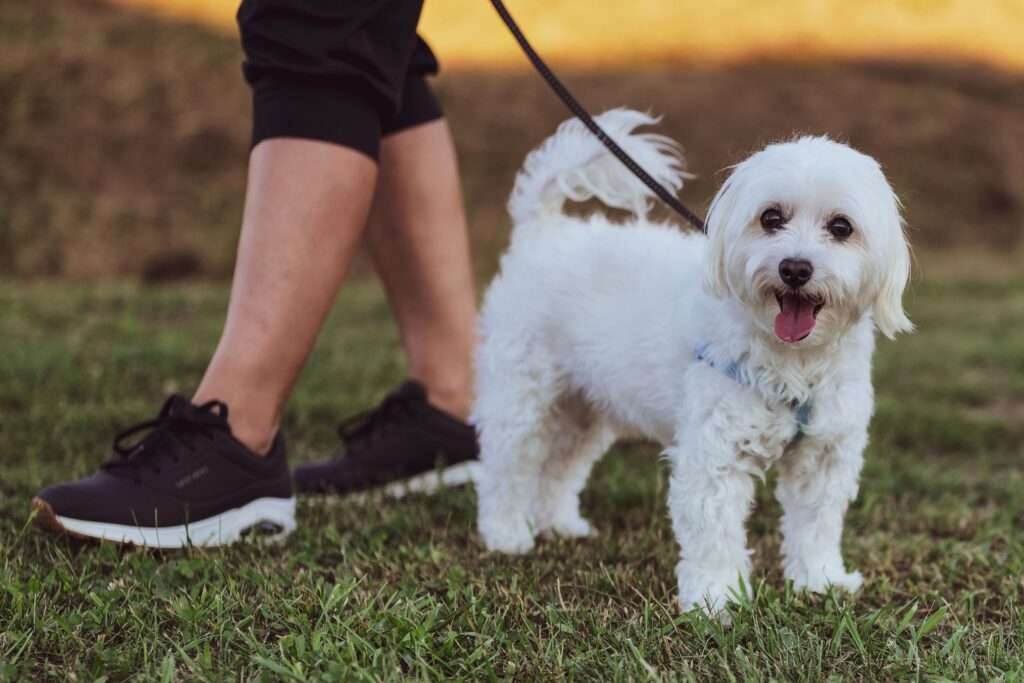
At three to four months, puppies often become more confident and interested in the world. Once your veterinarian confirms it is safe, introduce short walks in quiet locations and allow plenty of time for sniffing.
A walk does not need to cover a long distance to be valuable. Stopping to investigate scents, watching people from a comfortable distance and practising simple cues provide substantial mental stimulation.
Suitable activities may include:
- Brief walks with frequent sniffing stops
- Gentle fetch or tug games
- Short reward-based training sessions
- Puzzle toys and food enrichment
- Supervised exploration in safe environments
- Meeting suitable people and vaccinated dogs
This is also a good time to practise calm lead skills. Follow our instructions on how to train a puppy to walk on a lead before attempting busy or distracting routes.
Exercise for Puppies Aged 4 to 6 Months
Four-to-six-month-old puppies may appear to have endless energy, but their bones and joints are still developing. Increase activities gradually and provide variety instead of relying on one long or exhausting walk.
Appropriate activities may include:
- Gradually lengthened walks at a comfortable pace
- Sniffing and scent-search games
- Short obedience sessions
- Gentle play with family members
- Food puzzles and rotating toys
- Supervised play in a safely enclosed area
Avoid forced jogging, running beside a bicycle, repeated high jumps and long-distance hiking. Repetitive ball chasing with sudden turns and stops should also be limited.
Expert tip: Increase the variety of activities before increasing their intensity. A mixture of training, sniffing and gentle play can satisfy your puppy without overloading their developing body.
Exercise for Puppies Aged 6 to 12 Months
Many puppies look almost fully grown during this stage, but physical maturity may still be months away. Large and giant breeds can continue growing well beyond their first birthday.
Adolescent puppies may also become more independent and easily distracted. Continue reward-based training while gradually increasing the length and variety of outings.
Activities can include:
- Longer walks introduced gradually
- Moderate games of fetch with regular breaks
- Swimming when introduced safely and supervised
- Scent trails and “find it” games
- Ongoing obedience and recall training
- Low-impact agility foundations without high jumps
Use a properly fitted harness during walks and check the fit regularly as your puppy grows. Our guide to the best puppy harnesses explains how to measure your puppy correctly.
Exercise for Puppies Aged 12 to 18 Months and Older
Smaller breeds may reach maturity earlier than large or giant breeds. Before introducing long runs, strenuous hikes, repeated jumping or competitive agility, ask your veterinarian whether your puppy is physically mature enough.
Even after your puppy reaches maturity, build fitness gradually. A young dog should not progress from short neighbourhood walks to a long hike or run without preparation.
Physical Exercise Versus Mental Stimulation
A useful puppy exercise guide by age should include mental enrichment as well as physical movement. Puppies can become tired from thinking, learning and using their sense of smell without placing additional pressure on their joints.
Simple mental enrichment activities include:
- Hiding treats for your puppy to find
- Using a snuffle mat or puzzle feeder
- Teaching cues such as sit, come and leave it
- Allowing your puppy to explore different safe scents
- Rotating toys to maintain interest
- Practising calm behaviour on a mat
- Using safe food-dispensing toys
Choose toys appropriate for your puppy’s age, size and chewing strength. Our guide to the best puppy toys explains what to look for and when damaged toys should be replaced.
Signs Your Puppy May Be Getting Too Much Exercise
Puppies do not always stop when they become tired. Some become more excitable or mouthy, while others slow down or refuse to continue.
Possible signs your puppy needs a break include:
- Lying down or repeatedly stopping during a walk
- Falling behind or appearing unusually slow
- Heavy panting that does not settle after resting
- Limping or stiffness
- Sore or damaged paw pads
- Difficulty getting up after sleeping
- Reluctance to exercise the following day
- Unusual irritability or withdrawal
Stop the activity and allow your puppy to rest if they appear tired or uncomfortable. Contact your veterinarian if your puppy is limping, seems painful, experiences breathing difficulty or does not recover normally.
Signs Your Puppy May Need More Activity
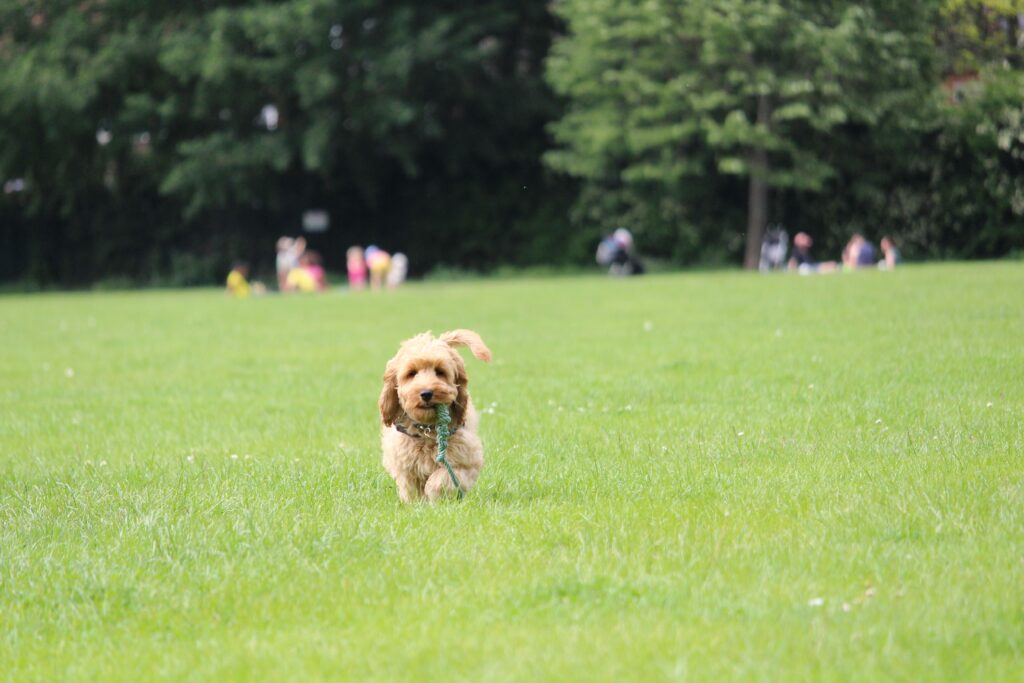
A puppy that needs additional physical activity or mental enrichment may appear restless, struggle to settle or constantly seek attention. However, chewing, biting and zooming are also normal puppy behaviours and do not automatically mean your puppy needs a longer walk.
Before substantially increasing physical exercise, try adding:
- An additional short training session
- A slow sniffing activity
- Interactive play with a suitable toy
- A food puzzle or supervised chew
- A new but safe environment to explore
Puppies can also become highly energetic when they are overtired. If your puppy has been active for a long period, a calm toilet break followed by sleep may be more helpful than additional exercise.
Puppy Exercise Safety Tips
- Increase exercise gradually rather than making sudden changes.
- Allow your puppy to sniff, pause and move at a comfortable pace.
- Carry water on longer outings and offer regular breaks.
- Avoid exercising during the hottest part of the day.
- Check that pavement and other surfaces are not too hot for your puppy’s paws.
- Use a secure lead and properly fitted collar or harness.
- Choose safe walking areas based on your veterinarian’s vaccination advice.
- Stop if your puppy shows pain, fear, exhaustion or breathing difficulty.
Common Puppy Exercise Mistakes
This puppy exercise guide by age can help you avoid several mistakes that commonly occur when owners are eager to keep an energetic puppy occupied.
Using Fixed Times as Strict Rules
Age-based estimates cannot account for every breed, health condition or activity. Observe your puppy and use veterinary advice rather than forcing them to complete a particular distance or number of minutes.
Trying to Tire Your Puppy Out
Longer exercise is not always the answer to energetic behaviour. Puppies need a balanced routine containing sleep, enrichment, training and gentle physical activity.
Ignoring Mental Stimulation
Walking is only one form of exercise. Training, sniffing and food puzzles can provide valuable enrichment without requiring strenuous movement.
Increasing Exercise Too Quickly
A sudden increase in distance, speed or intensity may lead to soreness or injury. Add new activities gradually and monitor how your puppy feels later that day and the following morning.
Exercising in Unsafe Weather
Hot weather can be especially dangerous for puppies and flat-faced breeds. Choose cooler times of day and stop immediately if your puppy appears distressed.
Comparing Your Puppy With Other Dogs
Two puppies of the same age may have very different exercise needs. Breed, size, confidence, health and previous experience all affect what an individual puppy can safely manage.
Our guide to common puppy training mistakes provides additional advice about setting realistic expectations and using positive reinforcement.
Frequently Asked Questions
How much exercise does an eight-week-old puppy need?
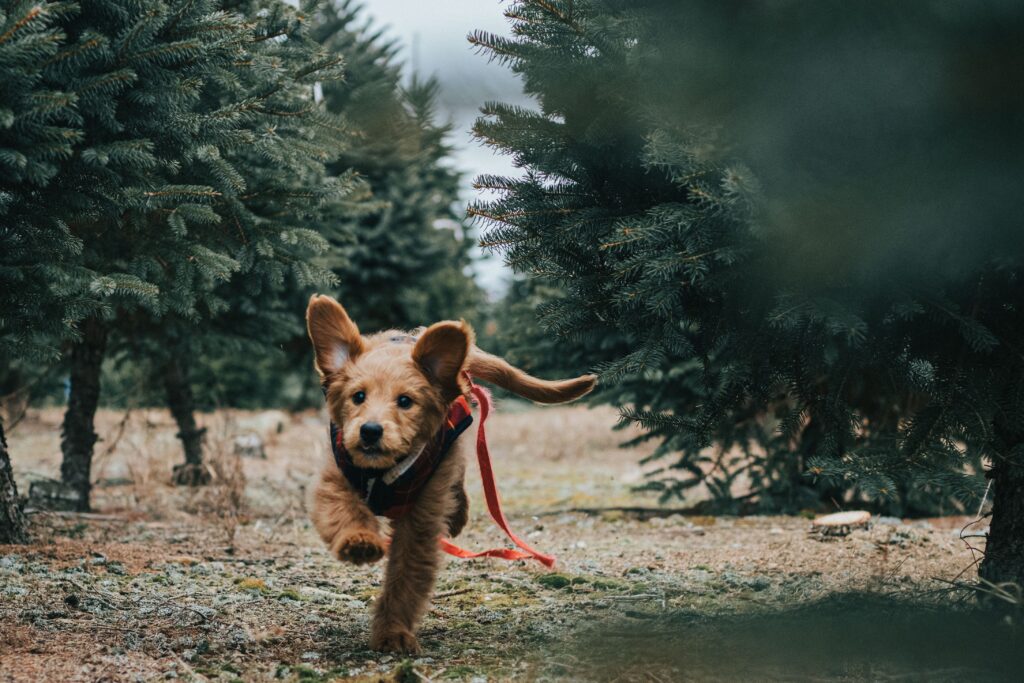
An eight-week-old puppy generally benefits from several brief, self-paced play, exploration and training sessions rather than long structured walks. Allow frequent opportunities to sleep and ask your veterinarian where outdoor exploration can occur safely.
Can I walk my puppy every day?
Many puppies can enjoy daily walks once their veterinarian confirms that outdoor walking is appropriate. Keep early walks gentle, allow sniffing and adjust the distance according to your puppy’s age, health and response.
Can a puppy get too much exercise?
Yes. Forced, repetitive or high-impact exercise may place unnecessary pressure on a puppy’s developing body. Limping, stiffness, persistent tiredness or reluctance to walk should be discussed with your veterinarian.
Is playing in the backyard enough exercise?
Supervised backyard play may provide plenty of activity for a very young puppy. As your puppy grows, they will also benefit from training, appropriate walks, mental enrichment and carefully managed exposure to different environments.
Do high-energy breeds need longer walks as puppies?
Not necessarily. High-energy puppies still have developing bodies. Provide safe outlets through training, scent activities, problem-solving games and controlled play rather than relying only on increasingly long walks.
Should I wake my puppy for exercise?
No. Sleep supports growth, recovery and learning. Allow a sleeping puppy to rest and offer appropriate activity after they wake naturally.
Quick Puppy Exercise Checklist
- Match activities to your puppy’s age, breed, health and confidence.
- Combine gentle physical activity with mental stimulation.
- Allow sniffing and self-paced exploration.
- Provide frequent rest and uninterrupted sleep.
- Avoid forced running, high jumping and repetitive strenuous exercise.
- Increase the duration and intensity gradually.
- Watch for tiredness, pain or changes in movement.
- Ask your veterinarian for individual guidance when necessary.
Key Things to Remember
A puppy exercise guide by age is a starting point rather than a strict timetable. Every puppy develops differently, and their routine should reflect their breed, size, health, confidence and energy level.
- Exercise should be enjoyable rather than exhausting.
- Mental stimulation is as valuable as physical activity.
- Young puppies need frequent sleep and recovery periods.
- High-impact exercise should wait until your puppy is physically mature.
- Changes in mobility or willingness to exercise require attention.
Final Thoughts
Following a sensible puppy exercise guide by age can help you raise an active, confident puppy without placing unnecessary strain on their developing body. Focus on creating a balanced routine that combines gentle movement, play, training, sniffing and plenty of rest.
As your puppy grows, gradually adjust their routine and continue watching how they respond. The goal is not simply to tire your puppy out—it is to help them build healthy, enjoyable exercise habits that can continue throughout adulthood.