Feeding your puppy the right amount of food at each stage of growth is important for healthy development. However, knowing how much to feed and how many meals to offer can be confusing for a first-time puppy owner.
This puppy feeding chart by age provides a simple starting point from 8 weeks to 12 months. You can use it to understand how meal frequency generally changes as your puppy grows.
Remember that every puppy is different. Breed expected adult size, activity level, health and the type of puppy food you use can all affect your puppy’s individual feeding needs.
Table of Contents
Puppy Feeding Chart by Age
Use this chart as a general guide to how often puppies may be fed as they grow.
| Puppy Age | General Meals Per Day |
|---|---|
| 8 to 12 weeks | Around 4 meals |
| 3 to 6 months | Around 3 meals |
| 6 to 12 months | Around 2 meals |
These meal frequencies are general guidelines rather than strict rules. Always check the feeding instructions provided with your puppy’s food and speak with your veterinarian if you are unsure about your puppy’s individual needs.
8 to 12 Weeks
At 8 to 12 weeks old, puppies are still very young and growing rapidly. Their daily food is commonly divided into around four small meals throughout the day.
Try to keep feeding times reasonably consistent. A predictable routine can make feeding easier and can also help you keep track of your puppy’s appetite.
Follow the feeding instructions for the particular puppy food you are using rather than estimating how much food to provide.
3 to 6 Months
Between 3 and 6 months, many puppies can gradually transition from four meals to around three meals each day. Your puppy will continue growing quickly during this stage, so monitor their growth and body condition rather than increasing portions simply because they appear hungry. Continue using a complete puppy food appropriate for their stage of growth and follow the manufacturer’s feeding guidelines.
6 to 12 Months
Between 6 and 12 months, many puppies can gradually transition towards two meals each day. However, the appropriate feeding schedule can vary. Breed expected adult size, individual development and health can all influence your puppy’s nutritional needs. Large-breed puppies can have particular nutritional requirements during growth, so ask your veterinarian for guidance if you are uncertain about when to change your puppy’s feeding schedule.
How to Use a Puppy Feeding Chart
A puppy feeding chart should be used as a starting point rather than an exact prescription.
The amount of food your puppy needs can depend on:
- Age
- Current weight
- Expected adult size
- Breed
- Activity level
- Body condition
- Health
- The calorie content of their food
Start with the feeding instructions on your puppy food packaging. Measure your puppy’s meals rather than guessing and monitor their growth and body condition over time. Remember that different foods contain different amounts of calories. This means the same volume of two different puppy foods may provide very different amounts of energy.
How Much Food Should You Give Your Puppy?
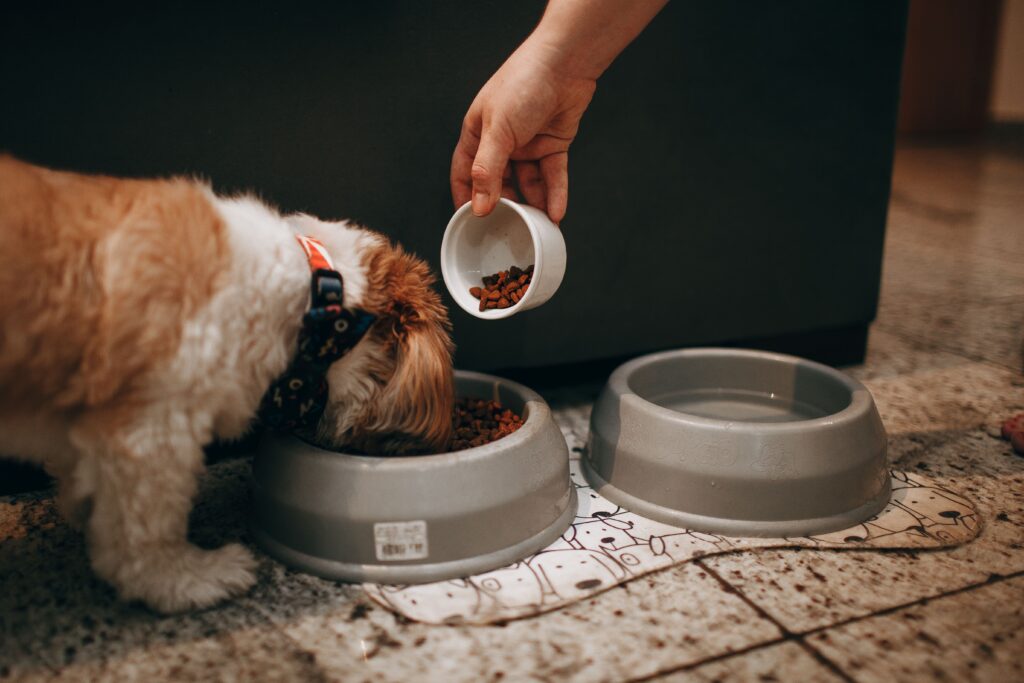
There is no single portion size that is suitable for every puppy. Rather than relying on a universal number of cups or grams, check the feeding guide provided with your puppy’s particular food. These guides usually provide recommendations based on factors such as age and weight. Your veterinarian can help you adjust the amount if your puppy is gaining too much or too little weight or has specific nutritional requirements.
Treats should also be considered part of your puppy’s overall daily food intake, particularly if you regularly use treats during training.
Signs Your Puppy’s Feeding Amount May Need Adjusting
Watching your puppy’s growth and body condition can help you determine whether their feeding routine may need adjusting.
Pay attention to changes such as unexpected weight gain or loss, significant changes in appetite, or digestive problems.
Avoid relying on appetite alone. Some puppies are highly food-motivated and may happily eat more than they need.
If you are concerned about your puppy’s growth, appetite, weight or digestion, speak with your veterinarian rather than making large changes to their diet on your own.
Common Puppy Feeding Mistakes
A feeding chart can provide useful guidance, but everyday feeding habits matter too.
Common mistakes include:
- Feeding portions that are consistently too large
- Giving too many treats
- Changing puppy food suddenly
- Guessing portions instead of measuring meals
- Feeding an inappropriate food for the puppy’s life stage
- Making major feeding changes without considering the puppy’s individual needs
If you need to change your puppy’s food, make the transition gradually unless your veterinarian advises otherwise.
When Should You Change Your Puppy’s Feeding Schedule?
You don’t need to change your puppy’s feeding schedule simply because they have reached an exact age on a chart. Instead, use age as a general guide. As your puppy grows, their number of daily meals will usually decrease gradually. Their individual development, breed, size and health should also be considered.
When reducing the number of meals, you are changing how your puppy’s daily food is divided. This does not automatically mean dramatically reducing the total amount of food they receive. Continue following the appropriate feeding guidelines and seek veterinary advice if you are uncertain.
Choosing the Right Puppy Food
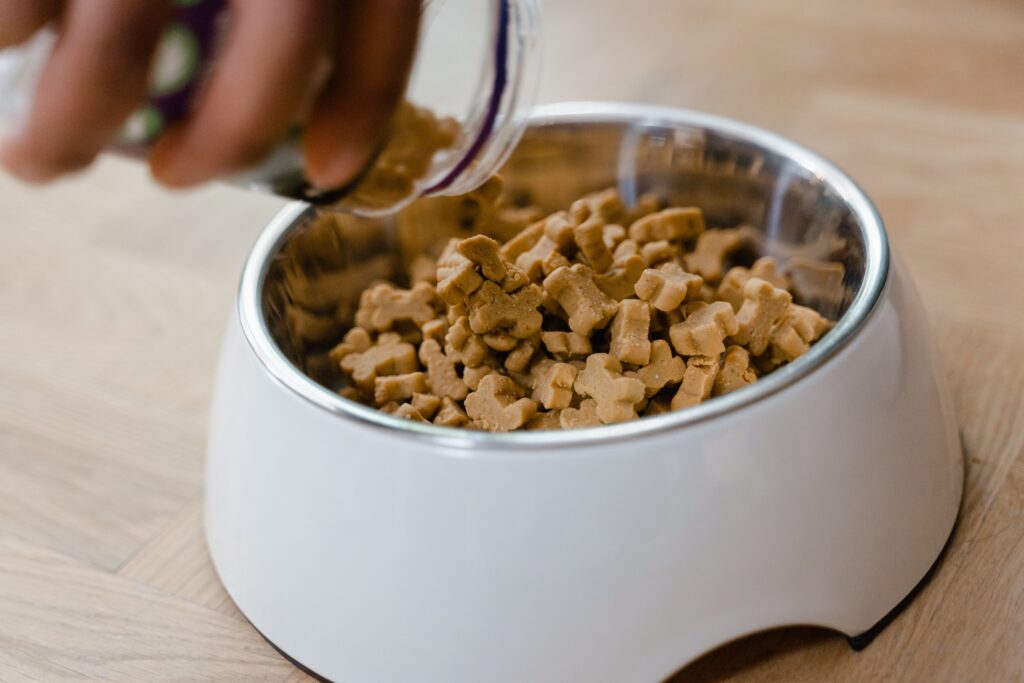
Look for a complete puppy food designed to support growth and development. Check that the food is appropriate for your puppy’s life stage and follow its feeding instructions carefully. Large-breed puppies may require food formulated specifically for their growth needs. If you’re unsure which food is appropriate for your puppy, your veterinarian can help you choose an option based on their age, expected adult size and health.
Frequently Asked Questions
How much should an 8-week-old puppy eat?
There isn’t one portion size that is suitable for every 8-week-old puppy. Check the feeding instructions on your puppy food packaging for an appropriate starting amount. At this age, the total daily food is commonly divided into around four smaller meals.
Can I use the same feeding chart for every breed?
No single feeding chart can provide exact portions for every puppy. Small, medium and large breeds can grow at very different rates and may have different nutritional requirements. Use feeding charts as general guidance and consider your puppy’s individual size, growth and health.
Should fresh water always be available?
Puppies should have access to fresh, clean drinking water. Keep your puppy’s water bowl clean and refill it regularly. If your veterinarian has given you specific instructions regarding your puppy’s water intake because of a health condition or procedure, follow their advice.
Puppy Feeding Chart by Age: Key Takeaways
Your puppy’s feeding needs will change considerably during their first year.
Remember:
- Young puppies generally need their daily food divided into several small meals.
- Many 8 to 12-week-old puppies are fed around four meals a day.
- Many puppies gradually move towards three meals and eventually two as they grow.
- Use your puppy food’s feeding instructions to determine appropriate portions.
- Measure meals rather than guessing.
- Keep fresh drinking water available.
- Monitor your puppy’s growth and body condition.
- Ask your veterinarian if you are concerned about your puppy’s feeding requirements.
A puppy feeding chart by age can make planning meals easier, but it should always be treated as a general guide. Your puppy’s individual growth, size, health and food will ultimately determine the feeding routine that works best for them.
Related Articles
- How Often Should You Feed a Puppy? A Complete Feeding Schedule by Age
- Best Puppy Food for Small, Medium and Large Breeds
- 10 Common Puppy Feeding Mistakes (And How to Avoid Them)
- Your First Night With a New Puppy