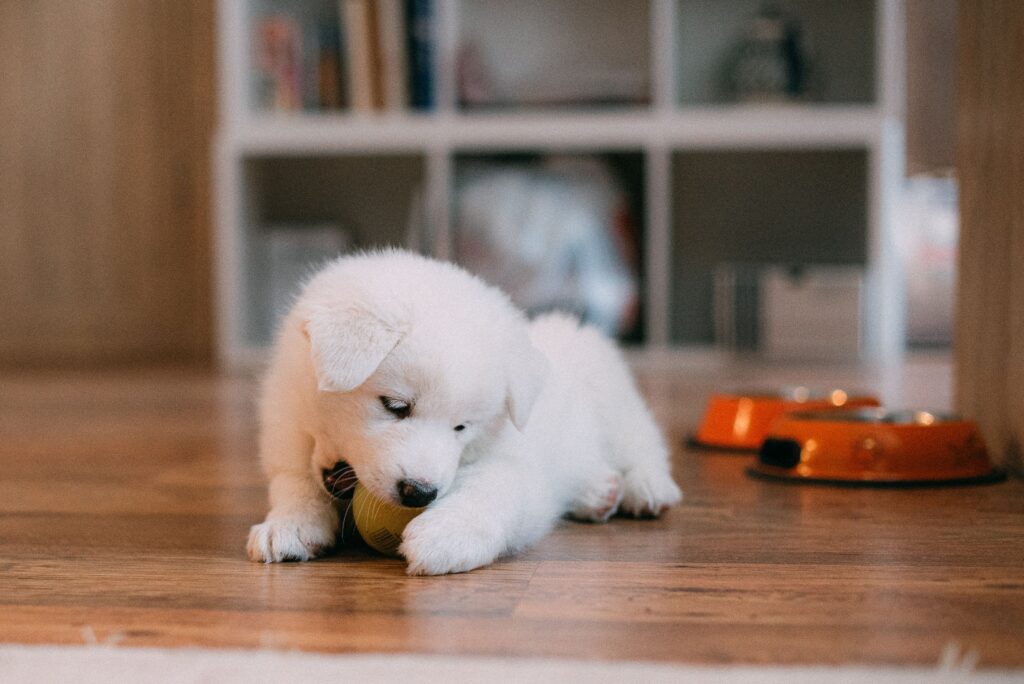
How often should you feed a puppy? The answer depends mainly on your puppy’s age, size, individual needs and the food you are feeding. Young puppies generally need several small meals throughout the day because they are growing rapidly and have smaller stomachs than adult dogs. As your puppy gets older, the number of daily meals can gradually decrease. In this guide, you’ll learn how often puppies are typically fed at different ages, how to determine appropriate portions and how to build a consistent feeding routine.
Table of Contents
How Often Should You Feed a Puppy by Age?
A regular feeding schedule can make mealtimes easier and help you keep track of how much your puppy is eating. The following schedule provides a general starting point. Your puppy may have different requirements depending on their breed, size, health and the food they eat.
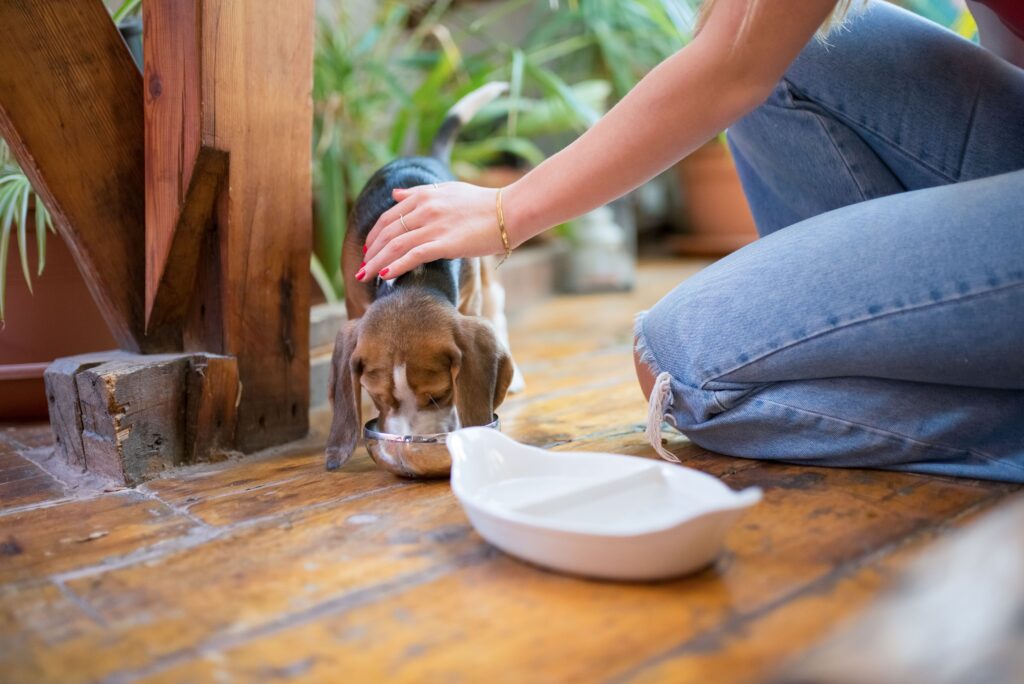
8 to 12 weeks: Young puppies are commonly fed four small meals a day, spaced throughout the day.
3 to 6 months: Many puppies can gradually transition to three meals a day as they grow.
6 to 12 months: Many older puppies can transition towards two meals a day. The appropriate timing can vary, particularly between smaller and larger breeds.
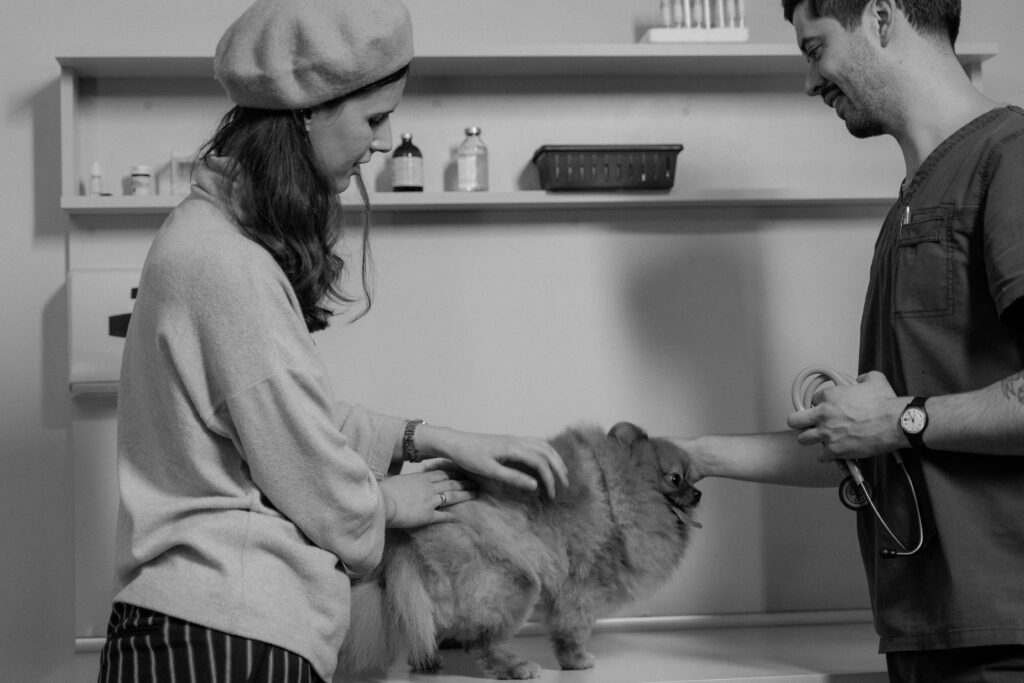
If you are unsure when to change your puppy’s feeding schedule, ask your veterinarian for advice based on your individual puppy.
How Much Should You Feed a Puppy?
There isn’t one portion size that works for every puppy. How much your puppy needs depends on factors including their age, current weight, expected adult size, activity level and the calorie content of their food.
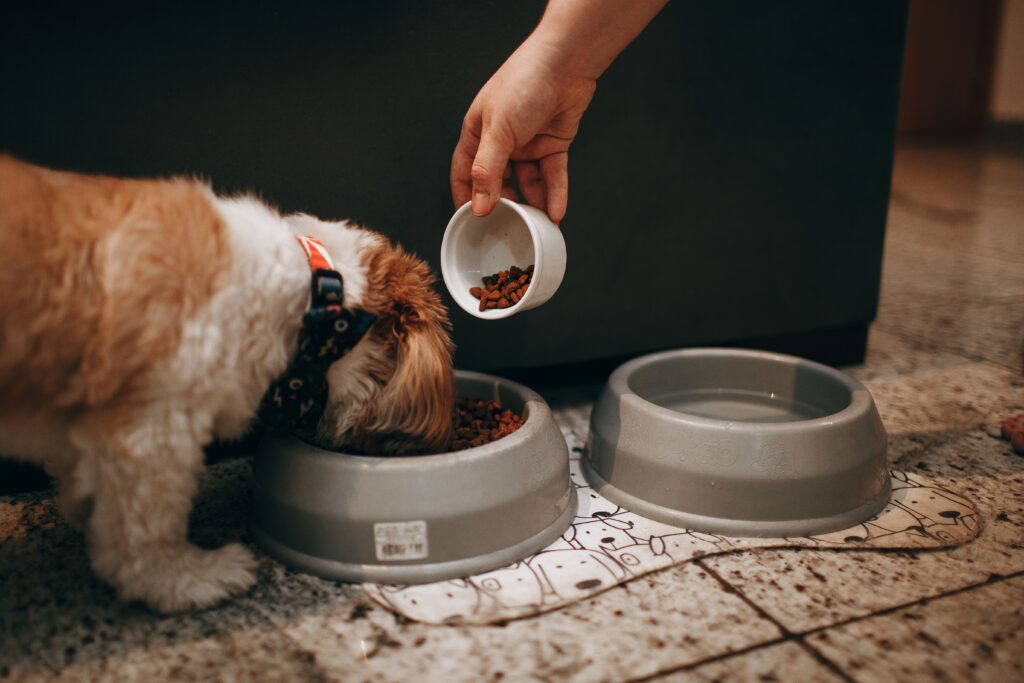
Start with the feeding guidelines provided on your puppy food packaging rather than guessing the portion. These guidelines are a starting point, so monitor your puppy’s growth and body condition and discuss adjustments with your veterinarian when necessary. Remember that different puppy foods can contain different amounts of calories. A cup of one food therefore isn’t necessarily equivalent to a cup of another.
Common Puppy Feeding Mistakes to Avoid
Even with a good feeding schedule, a few simple mistakes can make it harder to manage your puppy’s diet.
Try to avoid:
- Feeding portions that are consistently too large.
- Giving too many treats between meals.
- Changing your puppy’s food suddenly.
- Leaving perishable food sitting out for long periods.
- Forgetting to provide access to fresh drinking water.
- Guessing portion sizes instead of measuring your puppy’s food.
Treats also count towards your puppy’s overall daily food intake, so keep them sensible, particularly when using treats for training.
Signs Your Puppy May Be Hungry
Puppies often become interested when mealtime approaches. Your puppy might follow you into the kitchen, investigate their bowl or become excited when you prepare their food.
However, enthusiasm for food does not necessarily mean your puppy needs a larger portion.
Some puppies are simply very food-motivated.
Rather than increasing portions whenever your puppy asks for food, follow an appropriate feeding guide and monitor their growth and body condition.
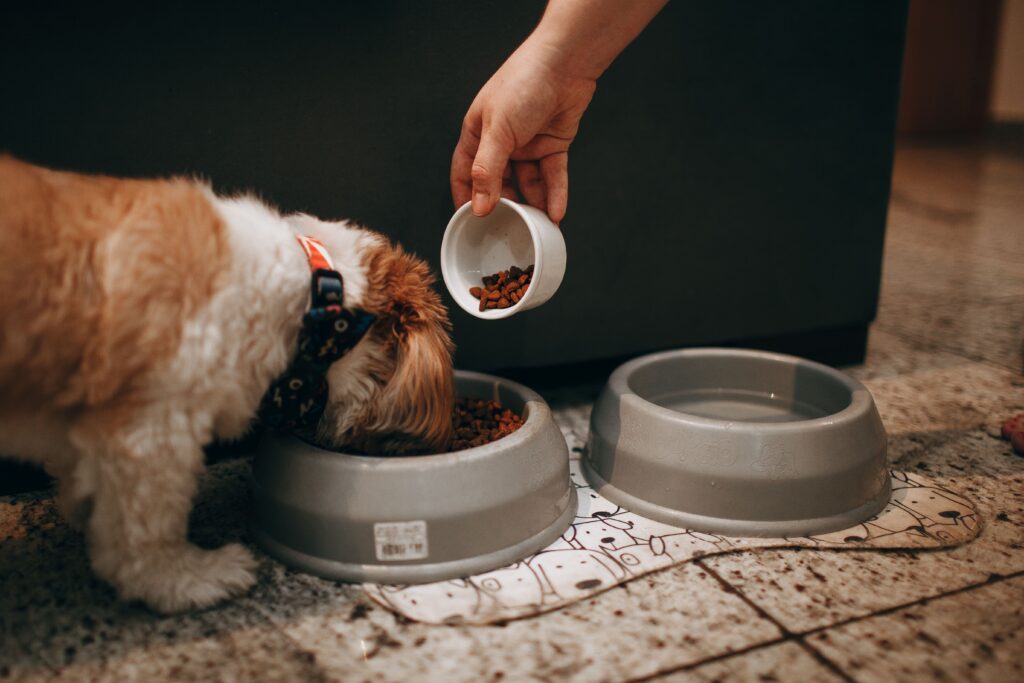
Can You Feed a Puppy Too Much?
Yes. Regularly feeding a puppy more calories than they need can contribute to excessive weight gain. Growing puppies need appropriate nutrition, but more food does not automatically mean better growth.
Measure meals rather than estimating portions, account for treats and regularly monitor your puppy’s body condition. If your puppy appears unusually thin, gains weight rapidly or you are unsure whether they are receiving enough food, speak with your veterinarian rather than making large changes to their diet on your own.
When Should You Change to Two Meals a Day?
There is no single age that suits every puppy.
Many puppies gradually move towards two daily meals as they get older, but the appropriate timing can depend on breed, size, individual development and health.
Rather than changing your puppy’s feeding routine simply because they have reached a particular birthday, consider their individual needs and follow your veterinarian’s advice.
Factors That Affect How Often You Should Feed a Puppy
Age is important, but it isn’t the only factor.
Your puppy’s feeding needs can also be influenced by:
- Breed and expected adult size.
- Current weight and body condition.
- Activity level.
- Type and calorie density of their food.
- Health conditions.
- Individual growth rate.
Large-breed puppies may have particularly specific nutritional requirements while they are growing, so choosing an appropriate complete puppy food and following professional advice is important.
How to Create a Puppy Feeding Routine
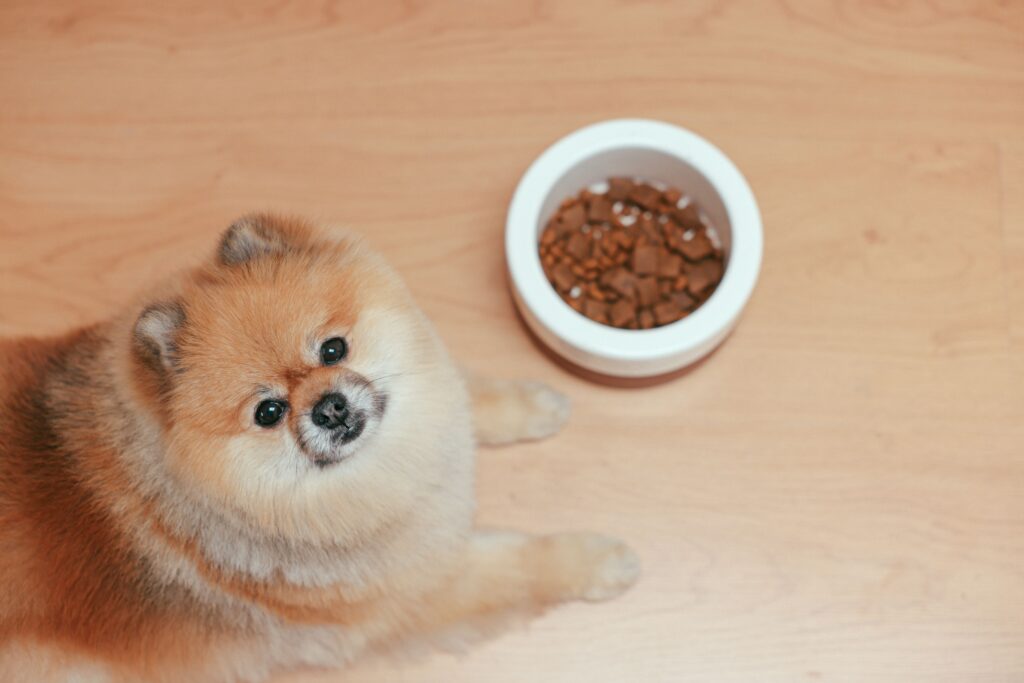
When deciding how often should you feed a puppy, choose feeding times that work with your normal daily schedule and try to keep them reasonably consistent. For example, a puppy eating three meals could have breakfast in the morning, another meal around the middle of the day and dinner in the evening. Measure each portion so you know approximately how much food your puppy receives throughout the day.
A regular meal schedule can also help with toilet training because puppies often need a toilet opportunity after eating. Keep fresh drinking water available and make sure anyone helping to care for your puppy knows their normal feeding amounts and times.
Frequently Asked Questions
How many meals does an 8-week-old puppy need?
Many 8-week-old puppies are fed around four small meals throughout the day. Follow the instructions for your puppy’s food and ask your veterinarian if you are uncertain about their individual requirements.
Can I feed my puppy only once a day?
One daily meal is generally not appropriate for a young puppy. Puppies typically need their daily food divided into several smaller meals.
The number of meals can gradually decrease as your puppy grows.
Should I wake my puppy to feed them?
A healthy puppy following a normal feeding routine will not necessarily need to be woken every time they sleep through a scheduled meal.
However, very young puppies and puppies with particular health or nutritional needs may require different feeding arrangements. Follow your veterinarian’s advice for your individual puppy.
Key Tips for Healthy Puppy Feeding
Understanding how often should you feed a puppy is only one part of establishing a healthy feeding routine. Choose a complete puppy food appropriate for your puppy’s life stage, measure portions instead of guessing and keep treats under control.
Introduce dietary changes gradually rather than abruptly changing foods and monitor your puppy’s weight and body condition as they grow. Most importantly, remember that feeding charts provide general guidance. Your veterinarian can help you determine whether your puppy’s individual feeding routine needs adjusting.