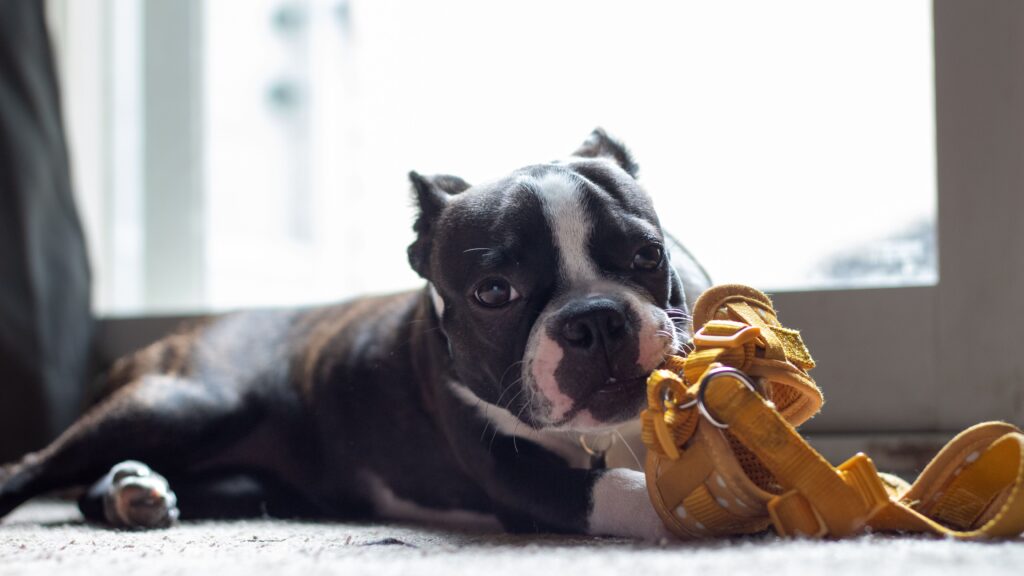
Learning how to stop puppy chewing can feel challenging when your shoes, furniture and household belongings are being damaged. However, chewing is a normal part of puppy development and should not be treated as deliberate misbehaviour.
Puppies use their mouths to explore their environment, entertain themselves and relieve discomfort during teething. Chewing may also increase when a puppy is bored, anxious, overtired or adjusting to a new home.
With puppy-proofing, appropriate toys, positive reinforcement and consistent supervision, you can protect your home while teaching your puppy healthier chewing habits.
Table of Contents
Why Do Puppies Chew?
Chewing is a natural behaviour that helps puppies investigate unfamiliar objects and textures. During teething, chewing may also provide comfort for sensitive gums as their adult teeth develop.
Puppies may also chew because they need entertainment or mental stimulation. Without access to appropriate puppy toys, they may create their own entertainment with shoes, furniture or children’s belongings.
Stress, loneliness and changes in routine can also contribute to excessive chewing. A puppy adjusting during their first week at home may use chewing as a way to cope with unfamiliar surroundings.
The RSPCA’s guidance on puppy chewing recommends identifying why a puppy is chewing and providing safe chew objects, enrichment and reward-based training.
How to Stop Puppy Chewing
Understanding how to stop puppy chewing does not mean trying to eliminate every form of chewing. Your puppy needs safe and appropriate outlets for this natural behaviour. The goal is to teach them which objects belong to them and which objects should be left alone.
Provide Appropriate Chew Toys
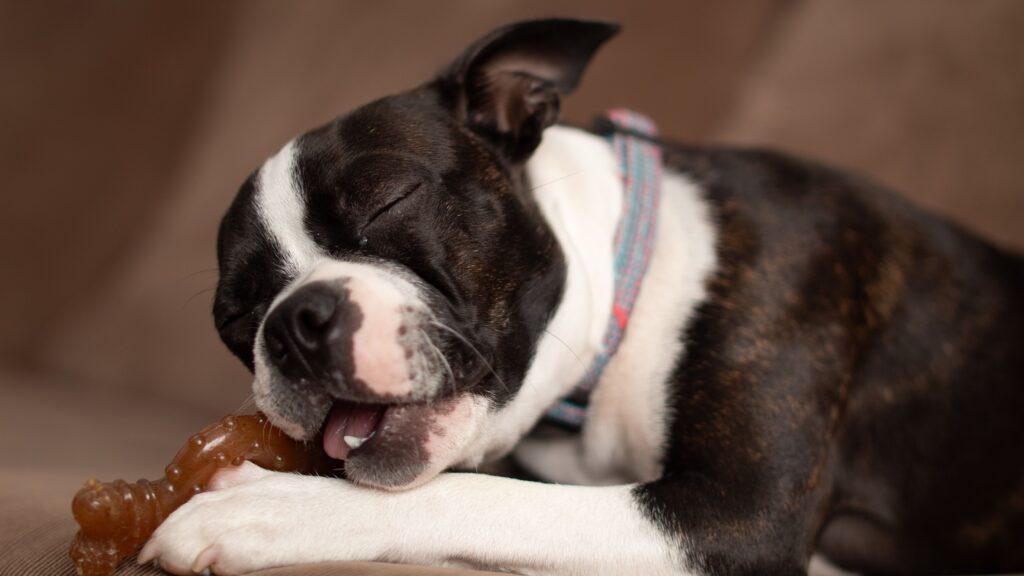
Offer several toys that are designed for puppies and suitable for your puppy’s size and chewing strength. Different textures may help keep them interested, but every toy should be checked for damaged or loose pieces.
Rotate the available toys rather than providing every toy at once. When you notice your puppy chewing an appropriate item, praise them or offer a small reward. This helps your puppy understand that choosing their own toys produces a positive result.
The AKC’s puppy-chewing safety guide recommends matching chew toys to the puppy’s chewing strength, supervising their use and regularly checking for damage.
Puppy-Proof Your Home
Your puppy cannot understand the difference between an expensive shoe and an old toy. Prevent access to inappropriate objects while they are learning.
Begin by puppy-proofing your home. Move these items out of reach:
- Shoes, handbags and clothing
- Electrical cords and chargers
- Remote controls and batteries
- Children’s toys and craft supplies
- Medicines and cleaning products
- Houseplants that may be unsafe for dogs
- Small objects that could be swallowed
Use closed doors, secure storage, puppy gates or a supervised safe area to limit access. Managing the environment prevents your puppy from repeatedly practising unwanted chewing.
Redirect Instead of Punishing
If you find your puppy chewing furniture or another unsuitable object, remain calm. Interrupt the behaviour without frightening them and offer an appropriate chew toy.
As soon as your puppy begins chewing the toy, reward the correct choice with praise, gentle attention or a small treat. If they return to the furniture, redirect them again or move them to a safely managed area.
Avoid chasing your puppy if they pick up an object. Chasing can turn the situation into a game and may encourage your puppy to run away with stolen items. Instead, calmly trade the object for a treat or suitable toy.
Provide Physical and Mental Activity
A puppy with unmet physical or mental needs may look for their own entertainment. Provide age-appropriate exercise, short training sessions, sniffing opportunities, food puzzles and interactive play.
Depending on your puppy’s age, health and vaccination status, this might include short daily lead walks, gentle games or exploration in a secure area.
Introducing safe environments and new experiences through gradual puppy socialization can also provide healthy mental stimulation.
Schedule Enough Rest
Overtired puppies can become restless and more likely to chew, nip or grab objects. Include predictable naps and quiet periods in your puppy’s routine.
If chewing suddenly increases after a long play session, your puppy may need rest rather than more activity. Guide them to a quiet area with an appropriate chew toy and allow them to settle.
Be Patient and Consistent
Consistency is essential when learning how to stop puppy chewing. Every family member should follow the same rules and redirect your puppy away from the same restricted objects.
Your puppy may need repeated guidance before they understand. Continue rewarding appropriate chewing instead of expecting the habit to change after one training session.
What Should You Do If Your Puppy Swallows Something?
Contact your veterinarian promptly if you believe your puppy has swallowed part of a toy, clothing, furniture, a battery, medication or another potentially dangerous object.
Seek urgent veterinary assistance if your puppy is choking, repeatedly vomiting, having difficulty breathing, showing abdominal pain, becoming unusually tired or refusing food. Do not attempt to make your puppy vomit unless a veterinarian specifically instructs you to do so.
Common Puppy-Chewing Mistakes
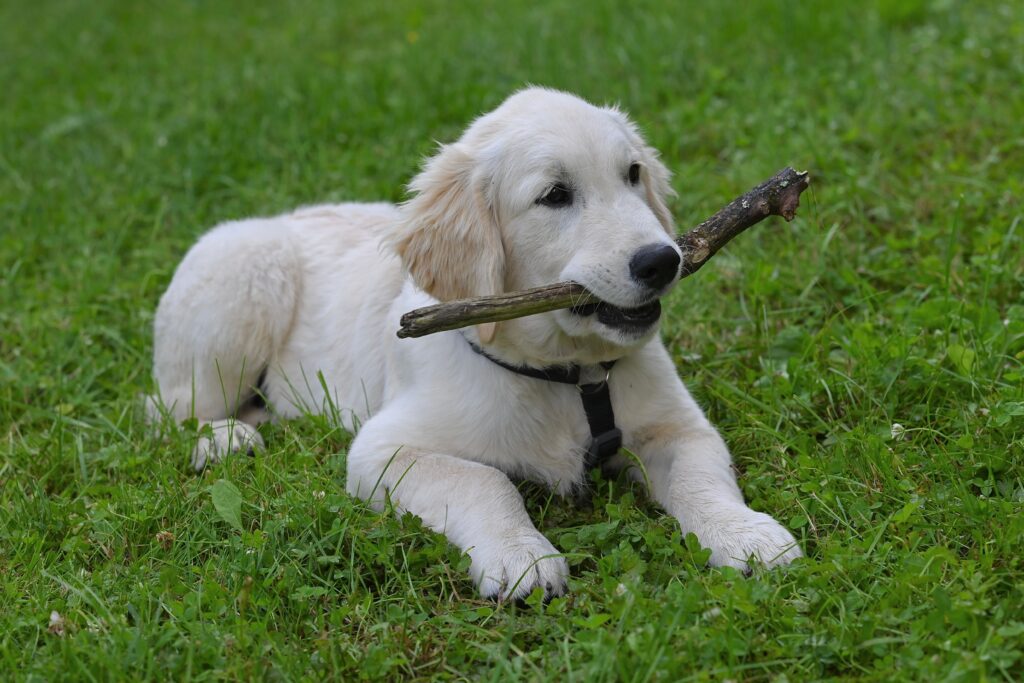
Avoiding these common mistakes can make learning how to stop puppy chewing easier and safer.
Using Punishment
Punishment does not teach your puppy which objects are suitable for chewing. Shouting or physical punishment may create fear and damage the trust between you and your puppy. Calmly redirect them and reward the behaviour you want.
Leaving Valuable or Dangerous Items Within Reach
If an object is available, your puppy may investigate it. Secure valuable and dangerous items before giving your puppy access to a room.
Not Providing Enough Mental Stimulation
A bored puppy may create entertainment by chewing household objects. Use short training exercises, suitable food puzzles, sniffing games and interactive play to keep them mentally engaged.
Providing Unsafe Chew Toys
A toy is not automatically safe simply because it is sold for dogs. Choose the correct size, supervise your puppy and remove toys that develop cracks, missing pieces or exposed stuffing.
Giving Mixed Messages
Allowing your puppy to chew an old shoe may make it harder for them to understand why a new shoe is forbidden. Provide clearly identifiable puppy toys instead of unwanted household belongings.
Real-Life Example
Imagine your puppy begins chewing the corner of a coffee table. Instead of scolding them, calmly interrupt the behaviour and offer a durable puppy toy.
As soon as your puppy begins chewing the toy, offer praise or a small treat. Repeating this process teaches your puppy that choosing their toys leads to rewards, while the furniture does not.
Frequently Asked Questions
Why is my puppy chewing everything?
Puppies chew to explore, relieve teething discomfort and entertain themselves. Chewing can also increase because of boredom, stress, loneliness or unmet physical and mental needs.
At what age do puppies stop chewing?
Teething-related chewing commonly decreases as a puppy’s adult teeth develop, often at approximately six to seven months. However, chewing remains a natural dog behaviour, and some dogs continue chewing throughout adulthood.
Should I punish my puppy for chewing?
No. Punishment may frighten your puppy without teaching them what they should chew. Redirect your puppy towards an appropriate item and reward them for choosing it.
What are the best toys for a puppy that loves chewing?
Choose puppy-specific toys that match your puppy’s size, age and chewing strength. Durable rubber toys, suitable teething toys and food-dispensing toys may provide appropriate outlets. Ask your veterinarian if you are unsure which options are safe.
How long does it take to stop destructive chewing?
There is no fixed timetable for how to stop puppy chewing. Progress depends on your puppy’s age, the reason for the behaviour and how consistently you manage the environment and reward suitable choices.
Quick Action Plan
If your puppy keeps chewing household items, begin with these steps:
- Remove valuable and dangerous objects from reach.
- Provide several safe chew toys with suitable textures.
- Redirect inappropriate chewing immediately.
- Reward your puppy for choosing an appropriate toy.
- Provide suitable exercise, training and mental stimulation.
- Include enough rest in your puppy’s routine.
- Stay patient and follow consistent household rules.
Key Things to Remember
- Chewing is a normal part of puppy development.
- Puppy-proofing helps prevent damage and injuries.
- Redirect chewing instead of using punishment.
- Select toys that match your puppy’s size and chewing strength.
- Inspect toys regularly and supervise chewing.
- Provide daily enrichment, appropriate activity and rest.
Final Thoughts
Learning how to stop puppy chewing requires time, supervision and patience. Your puppy is not trying to damage your belongings; they are exploring their environment through a natural behaviour.
By protecting your home, providing safe chew toys and consistently rewarding appropriate choices, you can help your puppy develop habits that remain useful throughout adulthood.