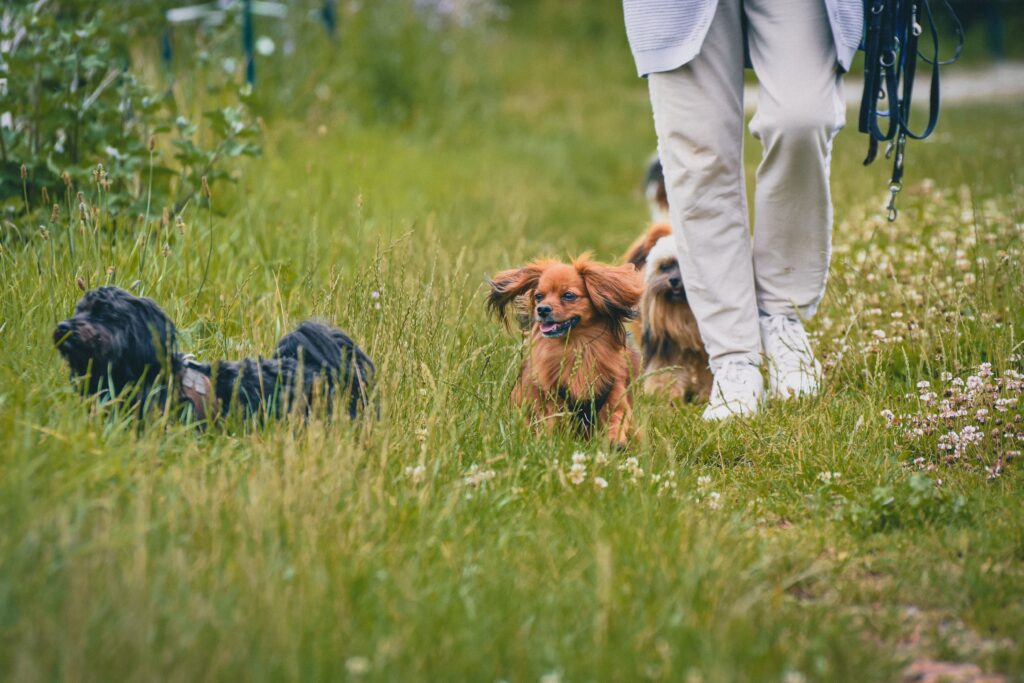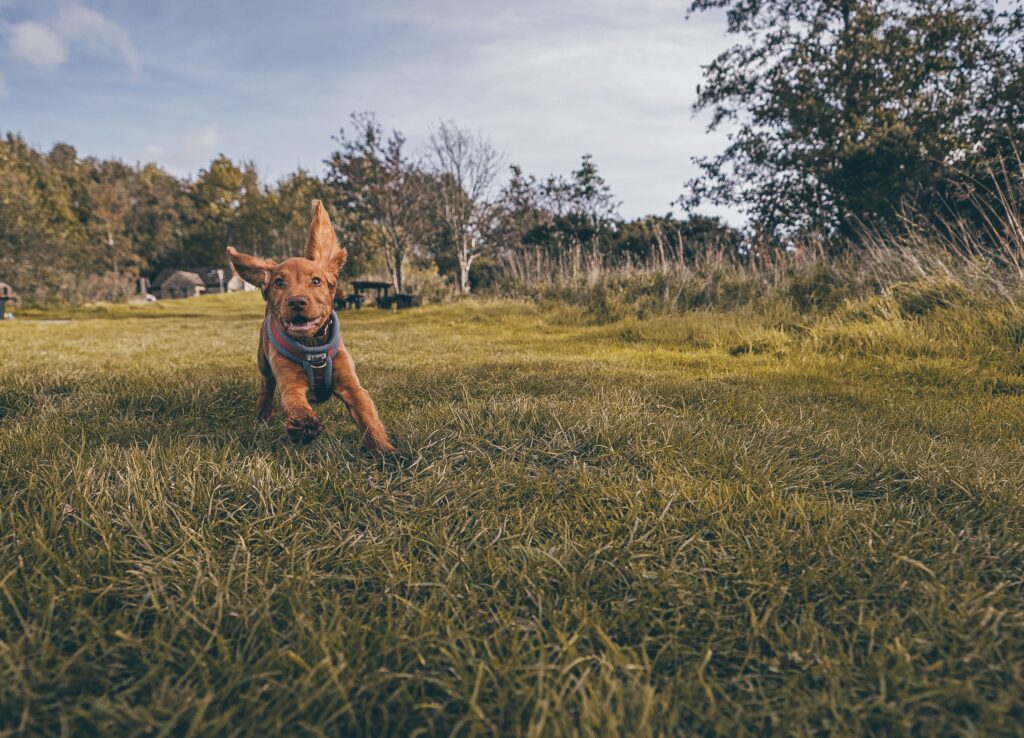
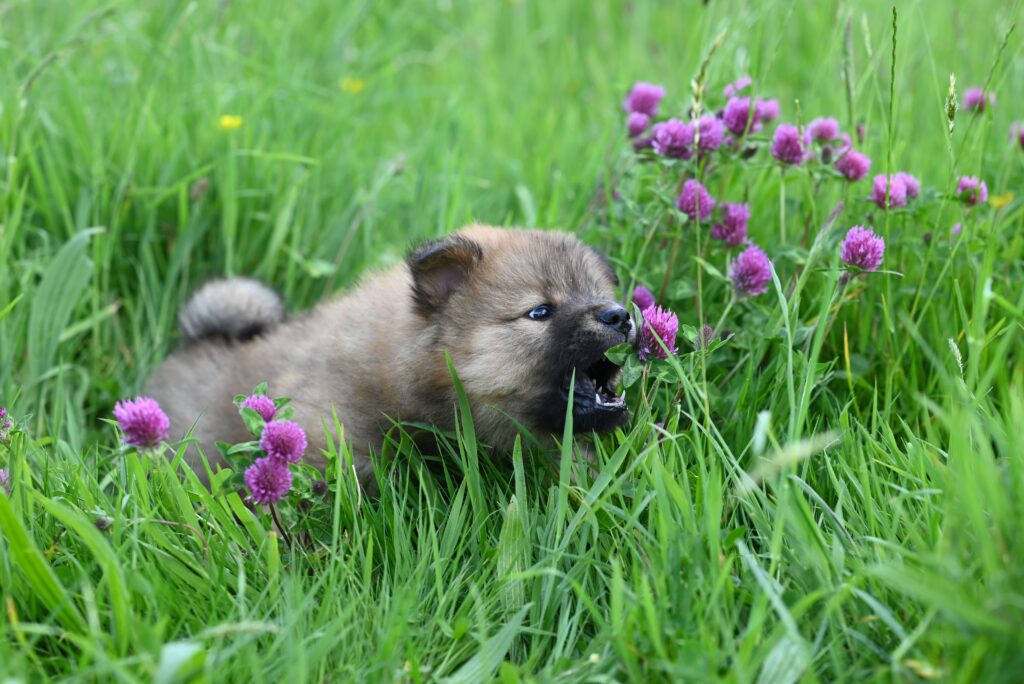
Understanding the different puppy growth stages can help you prepare for the remarkable changes that happen during your puppy’s first year. Puppies do much more than gain weight and grow taller. Their teeth change, coordination improves, confidence develops and their behavior becomes increasingly complex.
Some changes can make it appear that your puppy has suddenly forgotten their training. A puppy that followed you everywhere at three months may become more independent and easily distracted several months later. This does not necessarily mean that training has failed—it may be part of normal development.
This guide explains the major puppy growth stages from eight weeks to 12 months, including teething, socialization, adolescence and physical maturity. Developmental timelines vary considerably between breeds, so use these stages as flexible guides rather than strict deadlines.
Exercise needs also change throughout the first year. Our puppy exercise guide by age explains how to adjust walks, play and mental enrichment safely.
Understanding Puppy Growth and Development
Puppy development occurs physically, mentally, emotionally and socially. These areas do not always progress at the same speed. Your puppy may look nearly grown while still having immature impulse control and requiring considerable guidance.
Development is not always a straight line. Puppies may perform a skill successfully and later become less reliable when distracted, frightened, excited or entering adolescence. Continue practising in manageable situations and reward successful behaviour.
Breed size also influences physical growth. Small breeds generally reach their adult size sooner, while large and giant breeds may continue developing well beyond their first birthday. Ask your veterinarian about your puppy’s expected growth pattern, nutrition and exercise requirements.
Puppy Growth Stages at a Glance
This table provides a quick overview of what you may notice during your puppy’s first year.
| Age | Developmental focus | What you may notice |
|---|---|---|
| 8 to 10 weeks | Adjusting to a new home | Frequent sleep, short attention span and close attachment |
| 10 to 12 weeks | Socialisation and learning | Growing confidence, curiosity and rapid learning |
| 3 to 4 months | Exploration and early teething | More chewing, play and independence |
| 4 to 6 months | Teething and coordination | Adult teeth emerging and stronger physical abilities |
| 6 to 9 months | Early adolescence | Distraction, independence and possible training setbacks |
| 9 to 12 months | Moving towards adulthood | Adult appearance with continued emotional development |
These puppy growth stages may overlap. Your puppy can move through a stage earlier or later than another puppy without anything being wrong.
8 to 10 Weeks: Adjusting to a New Home
At around eight weeks, many puppies leave their mother and littermates and move into a new home. Everything may be unfamiliar, including the people, smells, noises, sleeping arrangements and daily routine.
Your puppy may:
- Follow you closely around the house
- Cry or become unsettled when separated from you
- Explore objects using their mouth
- Have frequent toilet accidents
- Display brief bursts of energy followed by long naps
- Have a very short attention span
- Show curiosity about unfamiliar sights and sounds
These behaviours are not signs of a badly behaved puppy. Your puppy is only beginning to learn how life in your household works.
Priorities During This Stage
Focus on helping your puppy feel safe and establishing simple routines for sleeping, feeding, toileting and play. Our guide to the first week with a new puppy provides a practical settling-in routine.
Training can begin immediately, but sessions should remain short and positive. Practise name recognition, coming towards you, gentle handling and rewarding calm behaviour.
10 to 12 Weeks: Confidence and Rapid Learning
Between 10 and 12 weeks, many puppies become more curious and confident. Your puppy may explore further away from you, display preferences for certain toys and become increasingly interested in their surroundings.
Their individual personality may also become more noticeable. Some puppies approach unfamiliar experiences enthusiastically, while others prefer to observe from a distance. Neither response is automatically better. Help your puppy develop confidence without forcing them into uncomfortable situations.
Socialisation Is Especially Important
Early socialisation involves carefully introducing your puppy to different people, animals, surfaces, sounds, environments and everyday experiences. The goal is not to expose them to everything as quickly as possible. Experiences should be positive, controlled and appropriate for your puppy’s comfort level.
The RSPCA’s puppy socialisation guidance identifies approximately three to 17 weeks as an especially important developmental period. Ask your veterinarian how to balance socialisation with vaccination and local disease risks.
Our complete guide on how to socialize a puppy explains how to introduce new experiences without overwhelming them.
At this age, continue practising:
- Responding to their name
- Coming when called in controlled environments
- Calmly accepting gentle handling
- Following simple cues such as sit
- Settling in a safe sleeping area
- Spending very brief periods apart from you
3 to 4 Months: Teething, Chewing and Exploration

At approximately three to four months, puppies enter the juvenile stage and often become more adventurous. Their coordination and attention span are improving, but they are still young and easily distracted.
Teething usually begins during this period as baby teeth start making way for adult teeth. Your puppy may chew furniture, shoes and other household objects while exploring and coping with tender gums.
Chewing is a normal behaviour that requires safe redirection rather than punishment. Provide appropriate chew toys, supervise your puppy and prevent access to dangerous or valuable items. Our guide on how to stop puppy chewing explains how to manage this stage positively.
You may notice:
- More chewing and mouthing
- Increased curiosity and exploration
- Longer periods of concentration
- More energetic play
- Growing confidence away from you
- Stronger preferences for toys and activities
- Testing which household rules remain consistent
Set boundaries that will remain appropriate when your puppy reaches their adult size. Jumping or grabbing clothes may seem harmless in a tiny puppy but become much harder to manage in a large adolescent dog.
4 to 6 Months: Adult Teeth and Growing Independence
Between four and six months, teething often becomes more noticeable as additional adult teeth emerge. Puppies begin with approximately 28 baby teeth and eventually develop 42 adult teeth.
Most adult teeth are present by approximately six to seven months, although individual timing varies. The VCA guide to puppy teeth explains that teething usually begins at around three-and-a-half to four months and continues until approximately six months.
Contact your veterinarian if you notice retained baby teeth, significant swelling, persistent bleeding, a strong mouth odour or difficulty eating.
Physical and Behavioural Changes
At this stage, your puppy may:
- Move with greater balance and coordination
- Stay awake for longer periods
- Become more confident exploring
- Show increased independence
- Become more easily distracted outdoors
- Require continued help with impulse control
Although your puppy is stronger, their bones and joints are still developing. Avoid forced running, repeated high jumping and other strenuous activities until your veterinarian confirms they are physically mature.
6 to 9 Months: Early Puppy Adolescence
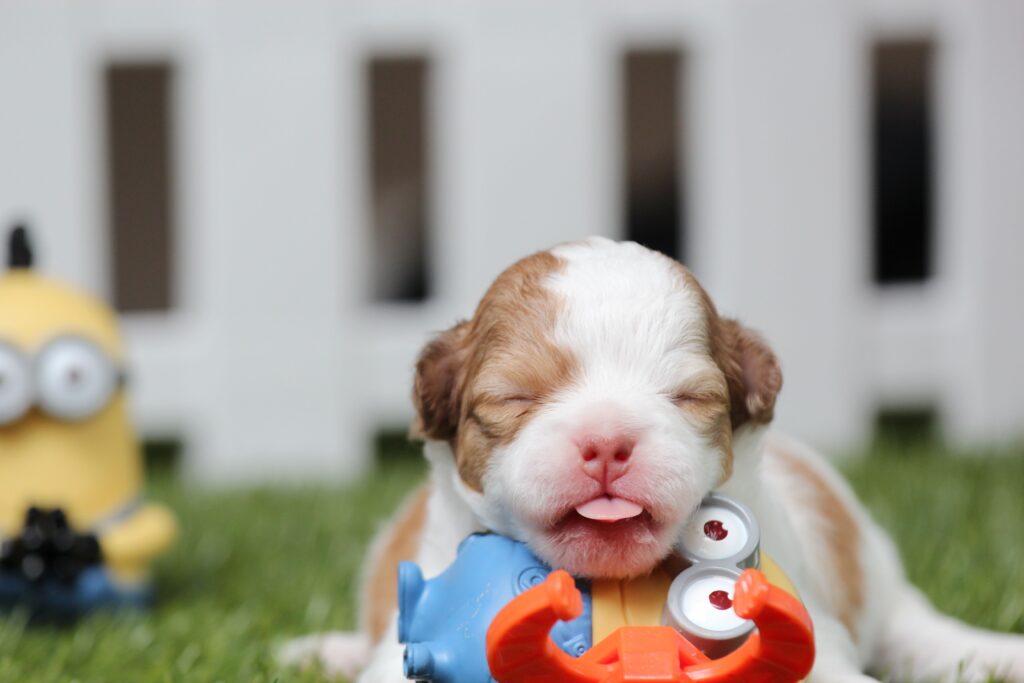
Adolescence commonly begins at around six to nine months, although large and giant breeds may enter this stage later. This can be one of the most challenging puppy growth stages for owners.
Your puppy may appear to forget familiar cues, become more interested in other dogs and display greater independence. They are not deliberately trying to take control of your household. Changing motivation, growing confidence and increased distraction can affect their responses.
You may notice:
- Reduced reliability around distractions
- More interest in exploring independently
- Testing or ignoring familiar boundaries
- Stronger emotional reactions
- Increased excitement around people or dogs
- Temporary training setbacks
If a previously reliable skill becomes difficult, reduce distractions and return to an easier version of the exercise. Reward successful responses and rebuild gradually. Punishment can damage trust without teaching your puppy what to do instead.
Our guide to avoiding common puppy training mistakes explains how to manage setbacks with realistic expectations.
9 to 12 Months: Moving Towards Adulthood
By nine to 12 months, your puppy may look increasingly like an adult dog. Their adult coat may be developing, their coordination has improved and their personality is becoming clearer.
However, adult appearance does not equal emotional maturity. Many puppies at this age remain adolescents and continue developing impulse control, confidence and social skills.
Small breeds may be approaching physical maturity, while large and giant breeds can have considerable growing left to do. Continue adjusting food, exercise and veterinary care according to your puppy’s expected adult size.
Continue practising:
- Calm behaviour around distractions
- Reliable responses to familiar cues
- Appropriate interactions with people and dogs
- Comfortable handling and grooming
- Independent relaxation
- Positive experiences in different environments
If your puppy regularly meets other dogs, make sure those experiences remain carefully managed. Our guide on how to introduce a puppy to other dogs explains how to recognise comfortable and uncomfortable interactions.
Small Versus Large Breed Puppy Development
No puppy growth timeline can provide exact dates for every dog because different breeds mature at very different rates.
| Expected adult size | General development pattern |
|---|---|
| Small breeds | Usually reach physical maturity earlier |
| Medium breeds | Often continue developing around their first year |
| Large breeds | May continue growing beyond 12 months |
| Giant breeds | Can require considerably longer to reach physical maturity |
These categories remain general. Genetics, nutrition, health and individual development can all affect growth. Your veterinarian can monitor weight, body condition, mobility and overall development during routine examinations.
Understanding Fear During Puppy Development
Some owners notice that a previously confident puppy suddenly becomes cautious about an ordinary object, person or sound. Sensitivity to frightening experiences can change during different puppy growth stages, but the timing and intensity vary between individuals.
If your puppy becomes frightened:
- Create enough distance for them to feel safer
- Remain calm and avoid forcing an interaction
- Allow your puppy to observe from a comfortable distance
- Reward relaxed behaviour
- Reintroduce the experience gradually
- Avoid punishment for fearful reactions
Seek guidance from your veterinarian or a qualified reward-based behaviour professional if the fear is severe, persists, becomes worse or creates a safety concern.
Physical Maturity Versus Emotional Maturity
Looking grown-up and behaving like an adult are not the same thing. A puppy may reach close to their adult height while still having immature emotional responses and limited impulse control.
Physical development includes changes to the bones, muscles, teeth, coat and reproductive system. Emotional and behavioural development includes confidence, social skills, frustration tolerance and the ability to remain calm in different situations.
An almost adult-sized puppy may still:
- Become overexcited easily
- Struggle to control impulses
- Forget manners around distractions
- Need consistent supervision
- Engage in puppy-like play
- Experience occasional training setbacks
Continue teaching the dog in front of you rather than expecting perfect adult behaviour because they have reached a particular size or birthday.
How to Support Healthy Puppy Growth
Provide Balanced Puppy Food
Feed a nutritionally complete food formulated for your puppy’s life stage and expected adult size. Avoid adding supplements unless your veterinarian recommends them, particularly for large and giant breeds.
If you’re choosing a food for your growing puppy, see our guide to the best puppy food for small, medium and large breeds.
Balance Exercise With Rest
Growing puppies need suitable activity without forced or repetitive high-impact exercise. They also need substantial sleep after play, walks, training and new experiences. Our puppy sleep schedule by age explains how sleeping patterns change throughout the first year.
Continue Positive Training
Training should continue through every developmental stage. Keep sessions short, reward successful behaviour and reduce difficulty when your puppy becomes distracted or frustrated.
Attend Regular Veterinary Examinations
Veterinary examinations allow your puppy’s weight, teeth, movement and general health to be monitored as they grow. They also provide opportunities to discuss vaccination, parasite prevention, nutrition and other individual needs.
When Puppy Development Needs Veterinary Attention
Development varies between puppies, so reaching a milestone earlier or later than another dog is not automatically concerning. Changes in your puppy’s normal pattern are often more important than comparisons.
Contact your veterinarian if you notice:
- Persistent limping or unusual movement
- Difficulty standing, walking or playing
- Unexpected weight loss or poor growth
- Persistent loss of appetite
- Repeated vomiting or diarrhoea
- Extreme tiredness, weakness or collapse
- Sudden significant behavioural changes
- Signs of persistent pain or discomfort
- Difficulty eating as adult teeth emerge
Common Puppy Development Mistakes
Expecting Adult Behaviour Too Soon
A large six-month-old puppy may look grown but still have immature impulse control. Continue supervising, teaching and rewarding the behaviours you want.
Assuming Training Regression Means Failure
Adolescence can increase independence and distraction. Return to simpler exercises and rebuild reliability instead of punishing mistakes.
Comparing Puppies
Breed, genetics, health, environment and temperament all influence development. Another puppy reaching a milestone sooner does not automatically mean yours is behind.
Punishing Fear
Fear is not disobedience. Punishing or forcing a frightened puppy can make the experience worse and weaken their trust in you.
Giving Too Much Freedom Too Quickly
Increase household freedom according to reliable behaviour rather than your puppy’s size. Supervision and puppy-proofing remain important throughout adolescence.
Frequently Asked Questions
When do puppies stop growing?
Growth depends heavily on breed and expected adult size. Small breeds generally reach physical maturity earlier, while large and giant breeds may continue growing well beyond their first birthday.
When does a puppy become an adolescent?
Adolescence often begins at approximately six to nine months, although the timing varies and may begin later in giant breeds. Emotional and social maturity can take considerably longer.
Why has my puppy suddenly stopped listening?
Growing independence and increased distraction can make familiar behaviours temporarily less reliable. Practise in easier environments, use valuable rewards and gradually rebuild the level of difficulty.
When do puppies finish teething?
Teething generally begins at around three-and-a-half to four months. Most adult teeth have emerged by approximately six to seven months, although individual puppies vary.
Is it normal for puppy behaviour to become more challenging?
Temporary setbacks can occur during teething and adolescence. Increased independence and distraction do not mean your puppy has forgotten everything. Continue using consistent, positive training.
When is a puppy considered an adult?
There is no universal age. Physical and emotional maturity occur at different times, and larger breeds generally take longer to mature than smaller breeds.
Puppy’s First-Year Milestone Checklist
- 8–12 weeks: Settling into the home, building trust and beginning simple training
- 3–4 months: Increased exploration, early teething and more noticeable chewing
- 4–6 months: Adult teeth emerging, improving coordination and growing independence
- 6–9 months: Adolescence, distraction and possible temporary training setbacks
- 9–12 months: Increasing physical maturity with continued emotional development
Key Things to Remember
- Puppy growth stages involve physical, emotional, behavioural and social development.
- Development varies considerably according to breed and individual puppy.
- Teething and increased chewing commonly occur during the early months.
- Growing independence can make training temporarily more challenging.
- Fearful behaviour should be handled patiently rather than punished.
- Physical maturity may occur before emotional maturity.
- Concerning changes in growth, movement, appetite or behaviour need veterinary advice.
Final Thoughts
The first year contains an extraordinary amount of change. The tiny puppy that follows you from room to room will gradually become stronger, more confident and increasingly independent.
Understanding the different puppy growth stages helps you respond to those changes with patience and realistic expectations. A setback does not mean your puppy has failed, and reaching a birthday does not instantly create an emotionally mature adult dog.
Continue providing positive training, suitable exercise, sufficient sleep, carefully managed experiences and regular veterinary care. You are not trying to rush your puppy towards adulthood—you are building the foundations for the healthy adult dog they will eventually become.