Learning how to introduce a puppy to other dogs safely can help your puppy develop confidence and appropriate social skills. However, there is no need to rush your puppy into playing with every dog they meet.
A successful introduction requires planning, a suitable environment and careful observation of both dogs’ body language. Each dog should have enough space to move away, and the interaction should progress at a pace that feels comfortable for both of them.
This guide explains when your puppy may be ready, how to prepare for the first meeting and what to do if either dog becomes uncomfortable.
Table of Contents
Why Safe Dog Introductions Matter
Knowing how to introduce a puppy to other dogs safely can help create positive experiences during an important stage of development. Calm meetings may help your puppy practise canine communication and feel more comfortable around suitable dogs.
A frightening or overwhelming encounter could make future meetings more difficult. Puppies may also become injured if they are placed with a dog that is too rough, intolerant or physically powerful.
Remember that your puppy does not need to interact with every dog. Calmly observing another dog, walking nearby or choosing to move away can all be successful social experiences. Our complete puppy socialisation guide explains how to introduce other people, places and everyday experiences.
When Is a Puppy Ready to Meet Other Dogs?
Your puppy’s health and vaccination status must be considered before arranging a meeting. Ask your veterinarian which activities and locations are appropriate based on local disease risks and your puppy’s individual health.
Review your puppy’s vaccination schedule and choose a dog that is healthy and appropriately vaccinated. Avoid public areas frequently visited by unfamiliar dogs until your veterinarian confirms they are suitable.
The American Veterinary Society of Animal Behavior’s puppy socialisation statement supports safe early social experiences while recommending appropriate vaccination, parasite control and hygienic environments.
Your puppy may be ready for a carefully controlled meeting when they:
- Are healthy and showing no signs of illness
- Have started their vaccination program and received veterinary approval
- Can observe another dog without becoming extremely frightened or excited
- Can respond to their name or a simple cue in a quiet environment
- Can recover after a mild new experience
These signs do not guarantee that your puppy will enjoy every dog. Temperament, previous experiences and the behaviour of the other dog will also affect the meeting.
How to Prepare for the First Meeting
Before deciding how to introduce a puppy to other dogs, prepare the location, select a suitable dog and agree on a simple plan with the other owner.
If you’re choosing a harness for your puppy, see our guide to the best puppy harnesses for small and large breeds.
Choose a Calm and Suitable Dog
Your puppy’s first companion should be a dog whose health, temperament and behaviour are already known. Choose a dog that is:
- Healthy and appropriately vaccinated
- Calm around young puppies
- Comfortable around unfamiliar dogs
- Not known to guard people, food or toys
- Under reliable control by their handler
An older dog is not automatically a suitable role model. Some adult dogs dislike energetic puppies or need additional space because of pain, age or previous experiences.
Select a Quiet, Low-Risk Location
Choose a spacious location that neither dog is likely to guard. Depending on vaccination status and veterinary advice, this might be a clean private yard or quiet, low-dog-traffic outdoor area.
Avoid busy dog parks, narrow pathways and places where multiple unfamiliar dogs may approach. Beaches and communal parks may also present disease or control risks for an incompletely vaccinated puppy.
Use Two Responsible Handlers
Each dog should have a separate adult handler. Use comfortable harnesses or collars and ordinary leads that allow control without creating constant tension.
Make sure your puppy has started learning to walk on a lead before arranging a parallel walk.
Remove High-Value Resources
If the meeting will continue inside a home, remove items that could create competition, including:
- Food bowls and treats
- Favourite toys
- Bones and chews
- Food-dispensing toys
- Bedding or resting areas one dog may guard
Prepare separate beds, water bowls and quiet areas so each dog can take a break.
How to Introduce a Puppy to Other Dogs Step by Step
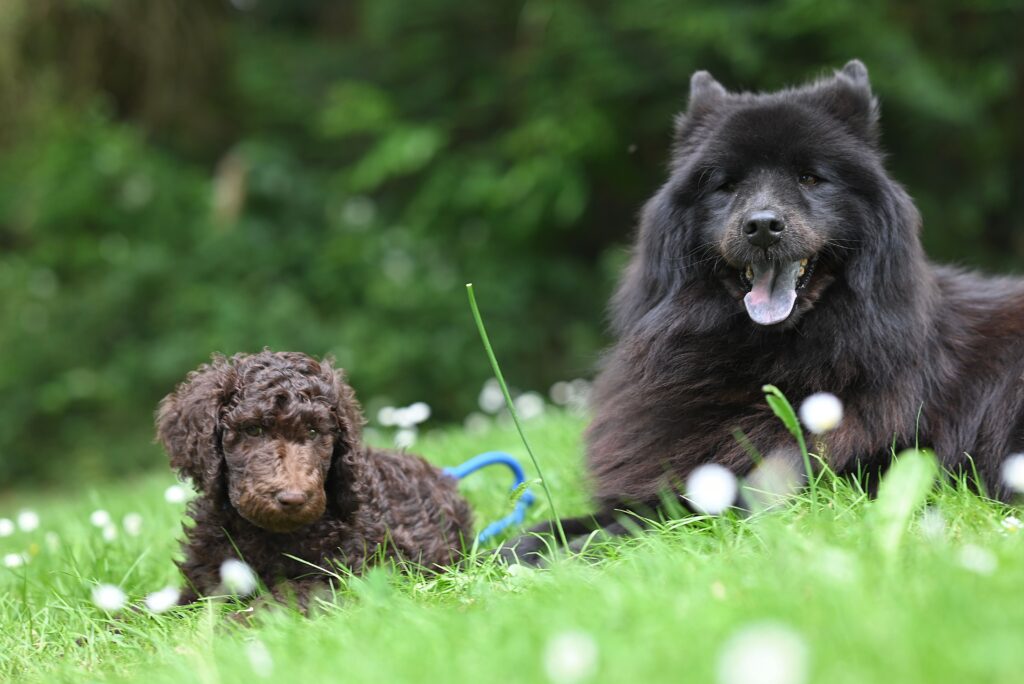
These steps provide a gradual introduction. Move forward only while both dogs remain relaxed.
Step 1: Begin at a Comfortable Distance
Start far enough apart that both dogs can notice each other without barking, lunging, hiding or becoming overly excited. Reward calm observation and attention towards the handler.
Do not walk the dogs directly towards each other. A head-on approach may feel intense. If either dog becomes uncomfortable, increase the distance instead of trying to correct or punish them.
Step 2: Walk in the Same Direction
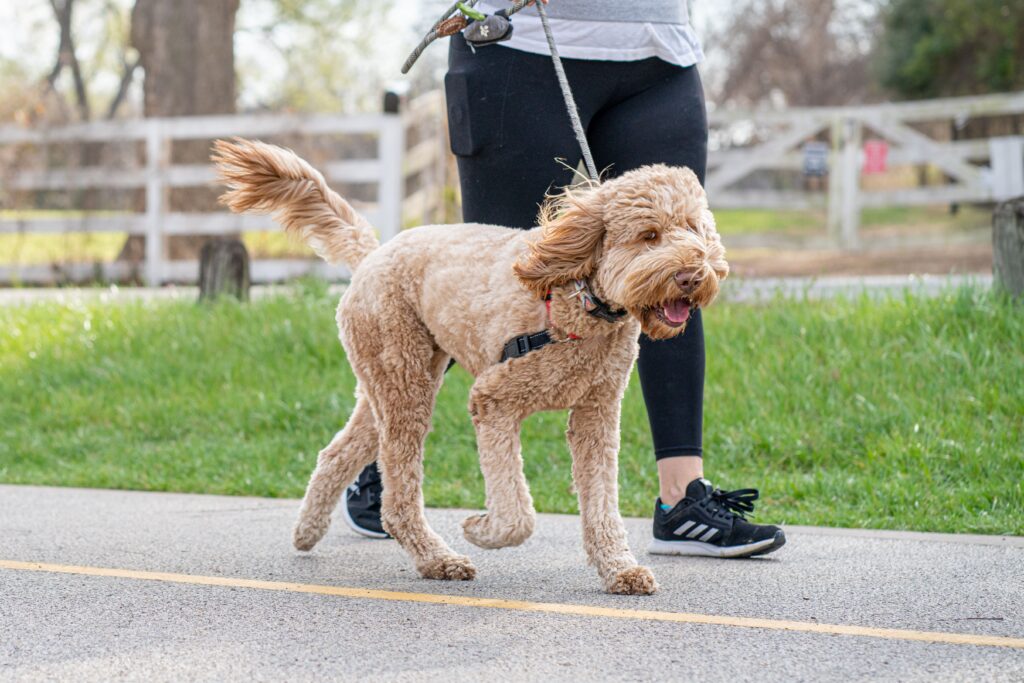
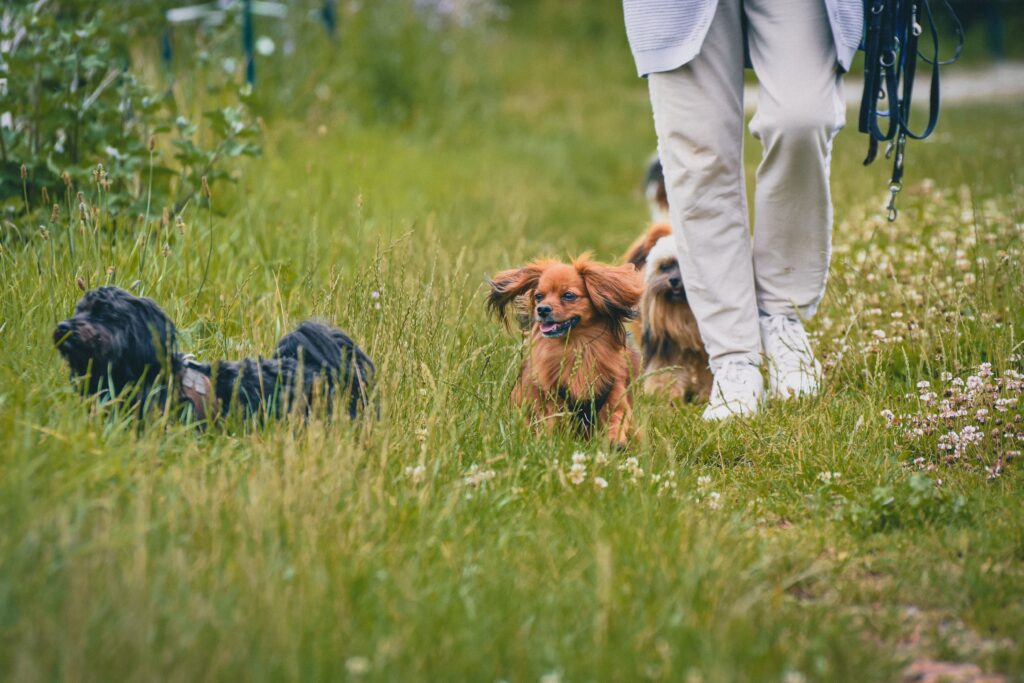
Walk both dogs in the same direction with several metres between them. Parallel walking allows the dogs to become familiar with each other’s presence without forcing immediate contact.
Gradually reduce the distance if both dogs remain relaxed. Avoid shortening the leads or pulling the dogs towards one another.
The RSPCA’s dog-introduction guidance recommends beginning on neutral ground, maintaining distance and rewarding calm behaviour before gradually allowing the dogs to walk beside each other.
Step 3: Allow a Brief Greeting
If both dogs appear relaxed, allow them to approach in a curved path and briefly investigate each other. Keep the leads loose while maintaining enough control to move away safely.
After a few seconds, calmly encourage the dogs to continue walking. Separating and reconnecting can reduce pressure and help prevent the greeting from becoming too intense.
Step 4: Watch the Entire Body
Do not judge the interaction from a wagging tail alone. A wag can occur during excitement, uncertainty or tension. Consider the dog’s posture, facial expression, movement and ability to disengage.
| More Relaxed Signs | Possible Signs of Discomfort |
|---|---|
| Loose, wiggly movement | Stiff or frozen posture |
| Soft facial expression | Hard staring |
| Curved approaches | Repeated direct rushing |
| Play bows with relaxed movement | Lip lifting, snapping or persistent growling |
| Taking breaks and returning voluntarily | Repeated hiding or attempts to escape |
| Balanced, two-way play | One dog constantly chasing or pinning the other |
No single signal should be interpreted in isolation. Look for combinations and changes in behaviour. Increase the distance if either dog appears uncomfortable.
Step 5: Allow Closely Supervised Play
If both dogs repeatedly show relaxed behaviour, you may consider supervised play in a secure private area. Check that the size difference and play styles are safe.
Healthy play commonly includes pauses, role changes and opportunities for both dogs to move away. Interrupt the session if one dog repeatedly tries to escape, becomes overwhelmed or cannot take a break.
Off-lead play is not required for a successful meeting. Walking calmly together may be the most suitable outcome.
Step 6: End While Both Dogs Are Calm
There is no perfect length for a first meeting. End the session before either dog becomes tired, frustrated or overstimulated.
Several short, comfortable meetings are usually preferable to one long interaction. Avoid continuing simply because you want the dogs to become friends immediately.
How to Introduce a Puppy to Other Dogs Already at Home
If you already have a dog, allow the first meeting to occur in a suitable neutral or low-territorial area when possible. After a calm parallel walk and brief greeting, bring the dogs home under close supervision.
Inside the home:
- Provide separate beds and resting spaces.
- Feed the dogs separately.
- Remove high-value toys and chews initially.
- Use baby gates or separate rooms for regular breaks.
- Supervise every interaction closely.
- Separate the dogs whenever direct supervision is unavailable.
Do not expect the older dog to entertain or correct the puppy. Protect the adult dog from persistent jumping, biting and chasing by giving both dogs frequent breaks.
What If the Introduction Does Not Go as Planned?
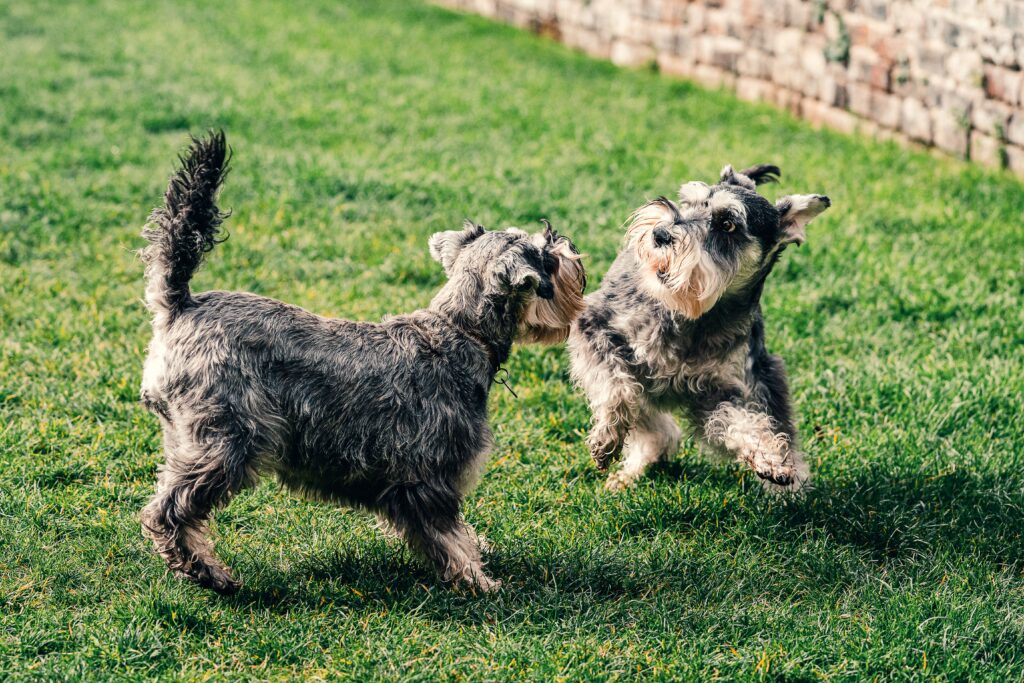
Not every meeting results in immediate play. Some dogs need several carefully managed introductions, while others may never enjoy close interaction.
If One Dog Growls
Growling is a warning that a dog may need additional space. Do not punish the growl. Calmly increase the distance and allow both dogs time to settle.
Seek professional guidance if growling repeatedly escalates to lunging, snapping or attempted biting.
If Your Puppy Appears Frightened
Your puppy may hide, tremble, tuck their tail, refuse treats or repeatedly try to leave. Increase the distance and end the interaction if they cannot relax.
During the next session, begin farther away and keep the meeting shorter. Do not hold your puppy near the other dog or force physical contact.
If the Dogs Ignore Each Other
Ignoring each other can be an excellent result. The dogs do not need to play or become close friends. Calmly sharing an area without stress demonstrates valuable self-control.
If a Fight Occurs
Do not place your hands between fighting dogs or grab near their mouths. Use a physical barrier if it can be done safely and seek immediate veterinary care for any injuries.
Keep the dogs separated and consult a qualified reward-based behaviour professional before attempting another introduction.
Common Introduction Mistakes
When learning how to introduce a puppy to other dogs, avoid these common puppy training mistakes.
Introducing the Dogs Too Quickly
Excitement about finding your puppy a friend can lead to rushed greetings. Begin at a distance and allow the dogs to approach gradually.
Holding the Leads Too Tightly
A constantly tight lead restricts natural movement and may contribute to frustration. Maintain control while allowing slack whenever it is safe.
Forcing Interaction
If either dog chooses to move away, do not force another greeting. Confidence develops when dogs are given safe choices.
Punishing Warning Signals
Growling, turning away, freezing and hiding provide important information. Punishing these signals does not resolve the underlying discomfort.
Visiting a Busy Dog Park
Busy dog parks are unpredictable and can overwhelm a young puppy. Begin with controlled one-to-one meetings instead.
Leaving the Dogs Unsupervised Too Soon
Dogs that appear relaxed during a short meeting may still experience conflict over food, toys, attention or resting areas. Supervise carefully and separate them when you cannot watch.
Real-Life Introduction Example
Sarah recently brought home a ten-week-old Labrador puppy named Max. She arranged a meeting with her neighbour’s calm adult dog after discussing vaccination safety with her veterinarian.
The dogs met in a quiet, low-traffic area. They began by walking in the same direction several metres apart. As both dogs relaxed, the handlers gradually reduced the distance and allowed a brief greeting on loose leads.
Max became excited after the first sniff, so the handlers calmly continued walking instead of encouraging immediate play. After several brief greetings, both dogs were walking comfortably together.
Sarah arranged another short meeting several days later. This gradual approach created useful social experiences without overwhelming the puppy or expecting an instant friendship.
When to Seek Professional Help
Speak with your veterinarian or a qualified reward-based behaviour professional if your puppy:
- Shows persistent or increasing fear around other dogs
- Repeatedly lunges, snaps or attempts to bite
- Cannot recover after stressful encounters
- Becomes increasingly reactive
- Has injured or been injured by another dog
- Guards food, toys, people or resting areas
Professional support is especially important if the other dog has a history of aggression or if there is a substantial difference in size or strength.
Frequently Asked Questions
Can my puppy meet an older dog?
Yes, provided the adult dog is healthy, appropriately vaccinated, calm and comfortable around puppies. Supervise closely and give the older dog frequent opportunities to rest away from the puppy.
Is growling always a bad sign?
Growling is a warning that a dog may be uncomfortable or need space. Do not punish it. Increase the distance and investigate what caused the discomfort.
Should puppies meet dogs before completing their vaccinations?
Ask your veterinarian because disease risks differ by location and individual health. Controlled meetings with known, healthy and vaccinated dogs may be possible, while high-traffic public dog areas should be avoided until your veterinarian approves them.
How long should the first meeting last?
There is no fixed duration. End the meeting while both dogs remain relaxed. A brief, successful interaction is better than continuing until one dog becomes tired or overwhelmed.
Do all dogs become friends?
No. Dogs have individual preferences. The goal is to help them remain safe and calm, not to force every pair of dogs to play together.
How to introduce a puppy to other dogs for the first time?
Choose a calm and healthy dog, meet in a quiet location and begin with parallel walking at a comfortable distance. Allow a brief greeting only when both dogs display relaxed body language.
Quick Action Plan
If you are wondering how to introduce a puppy to other dogs safely, follow these steps:
- Discuss vaccination and disease risks with your veterinarian.
- Choose a calm, healthy and appropriately vaccinated dog.
- Meet in a quiet, spacious and low-risk location.
- Use a separate responsible handler for each dog.
- Begin at a distance and walk in the same direction.
- Allow only brief greetings while both dogs remain relaxed.
- Increase distance if either dog shows discomfort.
- Keep the first meeting brief and positive.
Key Things to Remember
- Your puppy does not need to greet every dog.
- Vaccination and health precautions should be discussed with your veterinarian.
- Begin with a known, calm and suitable dog.
- Neutral or low-territorial locations can reduce pressure.
- Watch the entire body instead of relying on a wagging tail.
- Never force interaction or punish warning signals.
- Separate dogs when direct supervision is unavailable.
Final Thoughts
Learning how to introduce a puppy to other dogs is an important part of building safe and confident social behaviour. Successful introductions are measured by whether both dogs feel comfortable—not by how quickly they begin playing.
Move gradually, reward calm behaviour and allow either dog to create distance. Several short and thoughtful introductions can create a stronger foundation than one rushed or overwhelming meeting.