
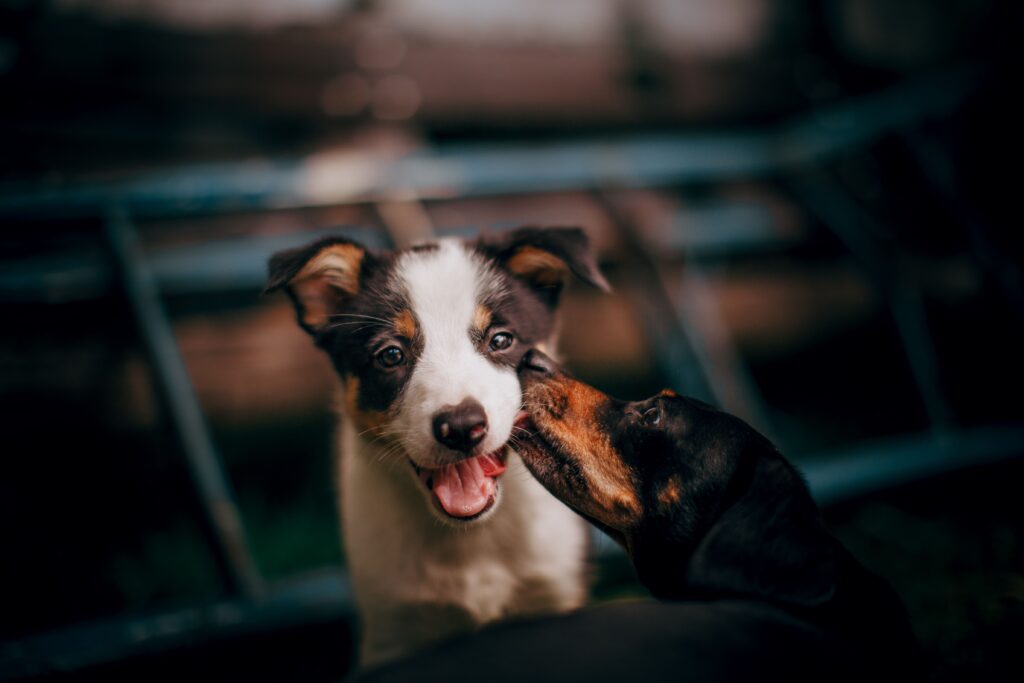
The signs of a healthy puppy include much more than a wet nose or wagging tail. Appetite, energy, movement, toileting, sleep and changes in behavior can all provide useful information about your puppy’s overall wellbeing.
Puppies naturally sleep for long periods, chew household objects and occasionally behave as though they have forgotten their training. This can make it difficult for new owners to separate normal puppy behaviour from something that requires attention.
This guide explains how to tell if your puppy is happy and healthy using 12 everyday signs. No single sign can guarantee perfect health, so consider the complete picture and learn what is normal for your individual puppy.
Important: This article cannot replace veterinary care. Contact your veterinarian if your puppy appears unwell, is experiencing pain or develops a sudden or concerning change in appetite, movement, breathing, toileting, energy or behavior.
Table of Contents
1. Your Puppy Has a Regular Appetite
Most healthy puppies show regular interest in their meals. Appetite can vary slightly during teething, routine changes or particularly exciting days, but you should gradually become familiar with your puppy’s normal eating pattern.
Pay attention to changes in behaviour around food as well as the amount eaten. A puppy that normally runs towards the bowl but suddenly refuses food requires more attention than one that has always eaten slowly.
Contact your veterinarian if you notice:
- Sudden or persistent refusal to eat
- Difficulty chewing or swallowing
- Repeated vomiting after meals
- A major change in thirst
- Unexpected weight loss
- Pain or distress while eating
Young puppies require appropriate puppy food and regular meals to support growth. Our guide on how often you should feed a puppy explains how feeding routines change with age.
2. Your Puppy’s Eyes Look Clear and Comfortable
Healthy eyes generally appear clear and comfortable rather than persistently red, swollen or irritated. A small amount of normal discharge may occasionally occur, but ongoing tearing, thick discharge or squinting can indicate discomfort.
Watch for:
- Persistent redness or swelling
- Cloudiness or a sudden change in appearance
- Thick, coloured or excessive discharge
- Keeping one eye closed
- Repeatedly pawing at the face
- Obvious sensitivity to light
Eye problems can become worse quickly. Contact your veterinarian rather than placing human eye drops or home remedies in your puppy’s eyes.
3. Their Skin and Coat Look Normal
A healthy coat can look very different depending on breed. It may be short, curly, fluffy, wiry or double-coated. What matters is whether the skin and coat appear normal and comfortable for your individual puppy.
Unexpected changes can include:
- Persistent scratching or licking
- Bald patches or unusual hair loss
- Red, inflamed or painful skin
- Ongoing flaking, greasiness or unpleasant odour
- Lumps, sores, scabs or wounds
- Fleas, ticks or other parasites
Regular brushing gives you an opportunity to notice these changes. Our guide on how to groom a puppy covers brushing, bathing, ear checks, nail care and dental hygiene.
4. Your Puppy Has Age-Appropriate Energy
Healthy puppies are generally curious and playful when awake, although energy levels vary according to breed, age, personality and recent activity.
The words when awake are important. Young puppies may sleep for much of the day. Sleeping after play, training or exploration is not the same as lethargy.
When your puppy wakes, consider whether they:
- Show interest in food
- Interact with familiar people
- Explore their surroundings
- Become interested in toys or play
- Respond normally to sights and sounds
A sudden and substantial drop in normal energy is more concerning than having a puppy that naturally sleeps a lot. Our puppy sleep schedule by age explains how sleep patterns change throughout the first year.
5. Your Puppy Moves and Breathes Comfortably
Watch how your puppy walks, runs, sits, stands and lies down. Movement should generally appear comfortable for that individual puppy, although young puppies can occasionally be clumsy while developing coordination.
Your puppy should also breathe comfortably while resting. Panting after play or during warm weather may be expected, but breathing should settle appropriately after the activity stops.
Contact your veterinarian if you notice:
- Persistent limping or stiffness
- Refusal to place weight on a leg
- Difficulty standing or lying down
- Pain when moving or being touched
- Sudden loss of coordination
- Laboured, noisy or unusually rapid breathing at rest
- Panting that does not settle after rest
Suitable exercise helps protect a puppy’s developing body. Follow our puppy exercise guide by age when planning walks and play.
6. Your Puppy Has a Consistent Toileting Pattern
Urine and stool can provide useful information about your puppy’s health. Once your puppy settles into a feeding and toilet routine, you will gradually learn what is normal for them.
Pay attention to significant changes in:
- Stool consistency, colour or frequency
- Urination frequency or appearance
- Straining or appearing painful while toileting
- Persistent diarrhoea
- Blood in the urine or stool
- Repeated vomiting alongside toileting changes
Indoor accidents are common during toilet training and do not automatically indicate illness. However, a sudden increase in accidents, straining, pain or greatly increased thirst requires attention.
Young puppies can become dehydrated more quickly than healthy adult dogs. Seek veterinary advice about persistent vomiting or diarrhoea rather than waiting several days. For normal training accidents, follow our guide on how to toilet train a puppy.
7. Your Puppy’s Teeth and Gums Look Comfortable
Healthy gums are generally moist and pink, but normal pigmentation varies. Some puppies naturally have dark or spotted gums, so learn what your puppy’s mouth normally looks like.
Puppies lose their baby teeth as adult teeth emerge. You may find small teeth around the home, although puppies frequently swallow them without their owners noticing.
Arrange veterinary advice if you notice:
- Persistent bleeding or swollen gums
- Broken or damaged teeth
- Difficulty eating or chewing
- Persistent strong mouth odour
- Repeatedly pawing at the mouth
- Baby teeth remaining beside emerging adult teeth
- Obvious pain when the mouth is touched
Introduce tooth brushing gradually using a dog-safe toothbrush and toothpaste. Never use human toothpaste because it is not intended to be swallowed by dogs.
8. Your Puppy’s Ears Look and Smell Normal
Healthy ears should generally feel comfortable and should not have persistent redness, swelling, discharge or strong odour. Ear appearance differs between puppies, so learn what is normal for yours.
Watch for:
- Persistent head shaking
- Repeated scratching at the ears
- A strong or unusual odour
- Redness, swelling or excessive discharge
- Pain when the ear is touched
- Repeatedly tilting the head
Do not aggressively clean an uncomfortable ear or insert cotton buds into the ear canal. Ask your veterinarian to examine painful, inflamed or unusually dirty ears.
9. Your Puppy Is Growing Steadily
Healthy development does not mean making your puppy grow as quickly as possible. Breed, genetics, nutrition and expected adult size all influence growth rate.
A Chihuahua and Great Dane of the same age will follow dramatically different growth patterns. Comparing puppies by weight alone is therefore not particularly useful.
Your veterinarian can monitor weight and body condition during routine appointments. Contact them if you notice unexpected weight loss, poor growth, difficulty eating or a suddenly enlarged or painful abdomen.
Our guide to puppy growth stages explains the physical and behavioural changes that commonly occur from eight weeks to 12 months.
10. Your Puppy Is Curious and Engaged
A healthy puppy will generally show interest in their surroundings when awake. This does not mean every puppy must enthusiastically approach every person, dog or unfamiliar object.
Some puppies are naturally confident explorers, while others prefer to observe before approaching. Look for engagement that is normal for your puppy’s personality.
Your puppy may:
- Investigate new smells and safe objects
- Show interest in suitable toys
- Respond to familiar people
- Become excited about favourite activities
- Explore while occasionally checking back with you
- Learn through play and interaction
Pay attention if a normally curious puppy suddenly becomes withdrawn, hides continually or loses interest in familiar activities. Behavioural changes can sometimes be an early indication that a puppy is uncomfortable or unwell.
11. Your Puppy Can Relax and Sleep Comfortably
The ability to rest comfortably is one of the frequently overlooked signs of a healthy puppy. Young puppies need considerably more sleep than adult dogs and may spend much of the day napping.
A puppy sleeping deeply after a busy morning is not necessarily bored or unwell. Consider whether your puppy wakes normally, eats, interacts and shows age-appropriate energy afterward.
Contact your veterinarian if your puppy becomes unusually difficult to wake, sleeps substantially more than normal or displays weakness, appetite loss, vomiting, diarrhoea or breathing changes.
12. Your Puppy Shows Relaxed Social Behaviour
A happy puppy may gradually become more comfortable in familiar environments and develop positive relationships with household members. Happiness does not require constant excitement or play.
Reassuring behaviours may include:
- Seeking interaction with familiar people
- Relaxing comfortably around the household
- Displaying a loose, comfortable body during play
- Responding positively to gentle handling
- Exploring and returning to check in with you
- Recovering after minor surprises
Confidence does not mean fearlessness. A healthy puppy can be cautious around unfamiliar situations. Allow them to observe and approach at their own pace. Our guide on how to socialize a puppy explains how to build positive experiences safely.
Healthy Puppy Versus Warning Signs
| Generally reassuring | Needs closer attention |
|---|---|
| Regular interest in meals | Sudden or persistent refusal to eat |
| Clear, comfortable eyes | Redness, cloudiness, pain or unusual discharge |
| Normal skin and coat | Persistent itching, sores or unexplained hair loss |
| Age-appropriate energy | Sudden weakness or unusual lethargy |
| Comfortable movement | Limping, stiffness or obvious pain |
| Normal toileting pattern | Persistent diarrhoea, blood or difficulty toileting |
| Comfortable mouth and gums | Swelling, bleeding or difficulty eating |
| Comfortable ears | Head shaking, odour, pain or discharge |
| Steady development | Unexpected weight loss or poor growth |
| Curiosity and engagement | Sudden withdrawal or loss of interest |
| Restful sleep | Difficult to wake or dramatically sleepier than normal |
| Growing confidence | Sudden or severe behavioural changes |
This table is not a diagnostic tool. The signs of a healthy puppy are most useful when considered together and compared with your puppy’s normal pattern.
When Should You Contact a Veterinarian?
Contact your veterinarian whenever you are concerned, especially when a symptom is sudden, severe, persistent or accompanied by other changes. Very young puppies can deteriorate more quickly than healthy adult dogs.
Seek urgent veterinary advice for:
- Difficulty breathing
- Collapse, extreme weakness or unresponsiveness
- Repeated vomiting or severe diarrhoea
- Blood in vomit, urine or stool
- Suspected poisoning
- Seizures
- A significant injury
- Severe or persistent pain
- A swollen or painful abdomen
- Difficulty passing urine
- Major changes in consciousness or responsiveness
The RSPCA’s veterinary check-up guidance explains why regular preventative care can help identify subtle health problems earlier.
Why Regular Puppy Check-Ups Matter
Home observations are valuable, but they cannot replace a professional examination. Some health problems do not create obvious symptoms during their early stages.
A veterinary wellness examination may assess your puppy’s growth, body condition, heart, lungs, teeth, eyes, ears, skin, coat, movement and general alertness. The VCA guide to canine wellness examinations provides an overview of what veterinarians examine during routine appointments.
Your veterinarian can also create an individual schedule for vaccinations, parasite prevention and other preventative healthcare based on your puppy’s location, lifestyle and medical history.
Common Puppy Health-Monitoring Mistakes
Relying on a Wet Nose
A wet or dry nose alone cannot tell you whether your puppy is healthy. Nose moisture can change after sleeping, during different weather or throughout an ordinary day.
Assuming a Wagging Tail Always Means Happiness
Dogs wag their tails for different reasons, including excitement, uncertainty and emotional arousal. Consider your puppy’s complete body language and the situation.
Looking at Only One Sign
An enthusiastic appetite or playful behaviour does not guarantee perfect health. Consider appetite, energy, movement, breathing, toileting, sleep and general comfort together.
Comparing Your Puppy With Another Dog
Breed, size, genetics, personality and development all influence appearance and behaviour. Focus on your puppy’s normal patterns rather than expecting them to behave exactly like another puppy.
Using Online Information as a Diagnosis
Online resources can help you become a better-informed owner, but they cannot examine your puppy. Do not delay veterinary care while trying to diagnose a serious problem yourself.
Frequently Asked Questions
What are the main signs of a healthy puppy?
The main signs of a healthy puppy include regular interest in food, comfortable movement, normal toileting, clear eyes, comfortable skin and ears, age-appropriate energy, restful sleep and interest in their surroundings.
Is a playful puppy always healthy?
Playfulness is encouraging, but it does not guarantee perfect health. Consider appetite, movement, breathing, toileting, body condition and other behaviours alongside energy levels.
Is it normal for a healthy puppy to sleep frequently?
Yes. Young puppies require substantial sleep. Pay attention to whether your puppy wakes normally, eats, interacts and shows appropriate interest in their surroundings.
Should a healthy puppy still visit the veterinarian?
Yes. Puppies require routine examinations and preventative healthcare even when they appear well. Your veterinarian will advise you about vaccinations, parasite prevention, nutrition and other individual needs.
Why has my puppy suddenly become quiet?
A puppy may occasionally be tired after a busy day. However, a sudden significant change accompanied by appetite loss, weakness, vomiting, diarrhoea, pain or breathing problems requires veterinary attention.
How often should I check my puppy?
Normal daily routines provide opportunities to observe your puppy. You can notice their appetite during meals, watch their movement during play and check their skin, coat, ears and paws while grooming.
Healthy Puppy Checklist
- Regular interest in suitable puppy food
- Access to clean drinking water
- Clear and comfortable eyes
- Comfortable ears without persistent odour or discharge
- Skin and coat that look normal for the breed
- Comfortable walking and playing
- Age-appropriate energy when awake
- A consistent toileting pattern
- Comfortable eating and chewing
- Curiosity and engagement with familiar activities
- The ability to relax and sleep
- No unexplained major behavioural changes
Key Things to Remember
- The signs of a healthy puppy should be considered together rather than individually.
- Learn what is normal for your individual puppy.
- Sudden changes can be more informative than a single daily variation.
- A wet nose or wagging tail does not prove that a puppy is healthy.
- Routine veterinary care remains important when your puppy appears well.
- Sudden, severe or persistent symptoms should not be ignored.
Final Thoughts
Learning the signs of a healthy puppy can make the first year feel less uncertain. You do not need to inspect every movement or expect your puppy to behave identically each day. Instead, become familiar with how they normally eat, sleep, play, move and interact.
That knowledge gives you a valuable baseline. When you understand your puppy’s usual patterns, you are better positioned to recognise a meaningful change and seek veterinary assistance when necessary.